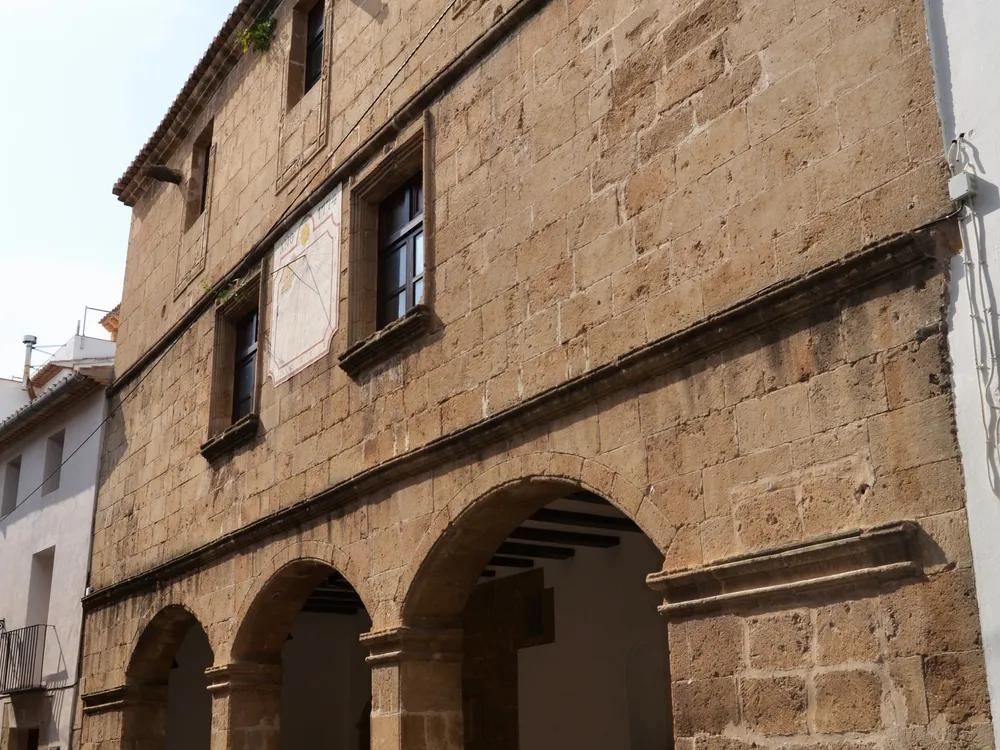
Sala del Consell
Late 16th-century building that housed municipal council sessions and the local archive. A key civil-heritage structure exemplifying medieval administration in Benissa.
The Sala del Consell was built in the late 16th century, during a period of economic expansion for Benissa, and was built for a very specific purpose: to serve as an almudín, a warehouse and exchange for buying and selling wheat and other grain, on what was then the village's main street.
From grain exchange to town hall
Over the centuries the building changed use several times. It came to house the town council's sessions and local archive, as well as the jail and other administrative offices, effectively becoming the Casa de la Villa. In the 20th century it served as a one-room school and then a secondary-school academy, before losing that educational role. Built in Renaissance style, it's recognisable by its large stone arcades, giving it an unusual degree of monumentality for a civic building of this scale.
Today the building has been adapted into a city interpretation centre, with a display covering Benissa's history from the Neolithic period through to the arrival of running water and the tourism boom of the 20th century. It stands in the heart of the historic centre, a short walk from the Iglesia de la Puríssima Xiqueta and the rest of the Casco Antiguo de Benissa, so it's usually visited alongside the rest of the village's heritage.
Frequently asked questions
Is the Sala del Consell free to visit?
No, there's a charge to enter the interpretation centre, unlike some other spots in the old town.
What was the building originally built for?
As an almudín, a warehouse and exchange where wheat was bought and sold in 16th-century Benissa.
What's inside?
An exhibition on Benissa's history, from the Neolithic period through to 20th-century tourism development, inside a Renaissance building with large stone arcades.
Comments
Sign in with Google to comment and rate
Be the first to comment.