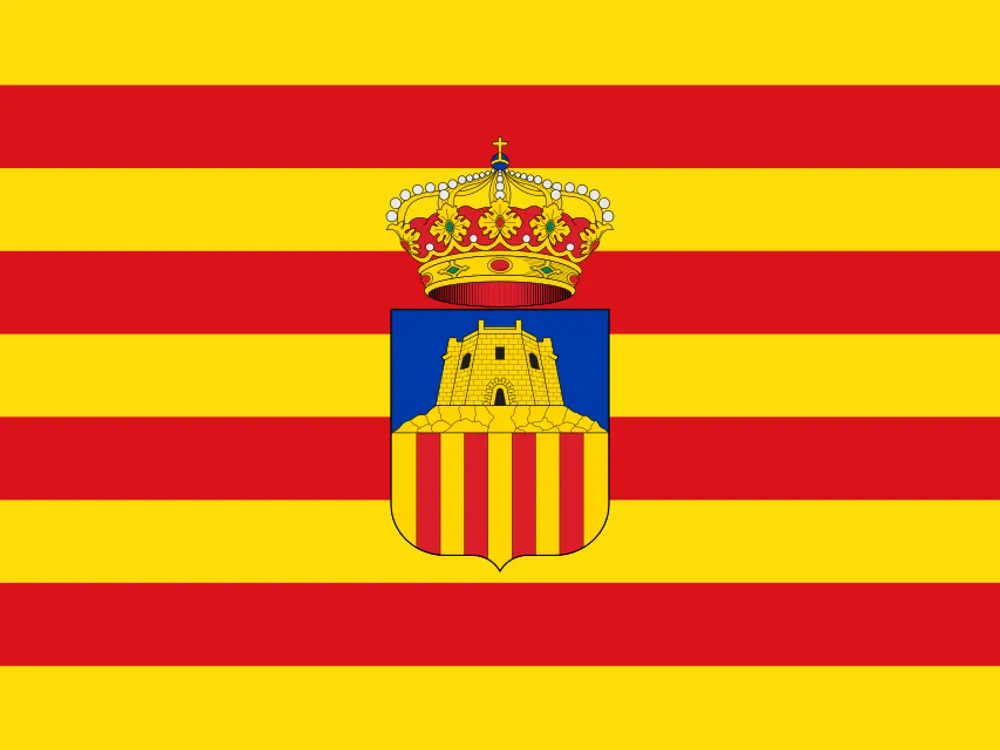
What to see in Benissa
Benissa is a hilltop town in the Marina Alta comarca, around seventy kilometres north of Alicante, with a historic centre that keeps much of its street layout and manor-house architecture from the 16th to the 19th centuries. Its name comes from the Arabic "Beni Isa" ("sons of Isa"), and the town was incorporated into the new Christian territories after James I's conquest in 1248.
History
Like much of this coast, Benissa suffered Barbary pirate raids between the 15th and 16th centuries, which pushed the town to strengthen its defences. After the expulsion of the Moriscos in 1609 it was resettled with families from Aragon, Catalonia and the Pyrenees, an origin still traceable in some local surnames. The old quarter keeps dozens of houses with heraldic facades, built by families who prospered from the raisin and wine trade in the centuries that followed.
What to see
The basilica of the Puríssima Xiqueta, Neogothic and completed in 1929, dominates the town's skyline with a height that has earned it the nickname "cathedral of the Marina." Close by, the old Sala del Consell, a late-16th-century Renaissance building that first served as a grain exchange and later as the town hall, now houses a centre on local history. A few minutes away by car, Benissa's coves and beaches — Fustera is the best known — mix sandy stretches with rocky outcrops, and the small Les Basetes harbour runs a sailing and diving school.
Local food centres on rock octopus and on the moscatel and mistela wines still produced in the area. The main festivities honouring the Puríssima Xiqueta, on the fourth Sunday of April, and the Moros y Cristianos parades at the end of June mark the town's festive calendar. For visitors combining inland and coast in one day, Benissa works well as a stop between the historic centre and the Marina Alta shoreline, with Teulada-Moraira a short drive away. The Convento de los Padres Franciscanos, founded in 1645 with markedly defensive architecture, is another point of interest in the old quarter. During the Spanish Civil War, Benissa housed a rest centre for the International Brigades with capacity for 350 beds, a lesser-known episode in its recent history. The municipality today has around 12,500 residents, more than a third of them foreign-born, a share that has reshaped local shops and services without displacing the historic centre. Many of the newcomers are drawn by the same combination of inland calm and coastal access that has long defined the area.
🚆 How to get there from Alicante
Benissa lies around seventy kilometres north of Alicante, in the Marina Alta. The usual route by car follows the AP-7 motorway to the relevant exit and then the N-332 or CV-745 road inland; the drive typically takes about an hour, longer on the coastal road in high season. Interurban bus lines also connect Benissa with Alicante and neighbouring Marina Alta towns, though less frequently than services to the larger coastal resorts. The municipality has no train station, so a car or bus is the most practical way in. Drivers coming from the south can also follow the coastal N-332 through Calpe and Altea, a slower but more scenic alternative that adds mountain and sea views along the way.
Compare all towns by transport →
-
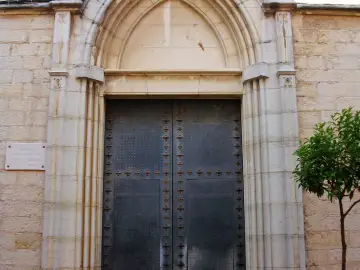 Church · FREEIglesia de la Puríssima XiquetaBenissa — Marina Alta (Alacant)
Neo-Gothic cathedral in Marina Alta begun in 1902 and completed in 1929, 35 metres tall.
- 🗿Monument · FREECasco Antiguo de BenissaBenissa — Marina Alta (Alacant)
Alicante's best-preserved medieval centre with cobbled stone streets and stonework facades.
-
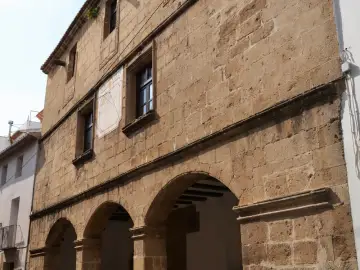 MonumentSala del ConsellBenissa — Marina Alta (Alacant)
Late 16th-century building that housed municipal council sessions and the local archive.
-
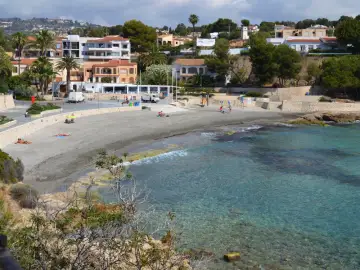 Beach & nature · FREECalas y Playas de BenissaBenissa — Marina Alta (Alacant)
Four kilometres of coastline combining sandy beaches and rocky coves with clear waters.
Frequently asked questions
What is the Sala del Consell in Benissa?
It's a 16th-century Renaissance building, once a grain exchange and later the town hall, that now houses a centre on the town's history.
Does Benissa have beaches, or just a historic centre?
Both: an inland historic centre and a stretch of coast with several coves, including Fustera beach.
When are Benissa's main festivities?
The Puríssima Xiqueta festival takes place on the fourth Sunday of April, and the Moros y Cristianos parades happen at the end of June.