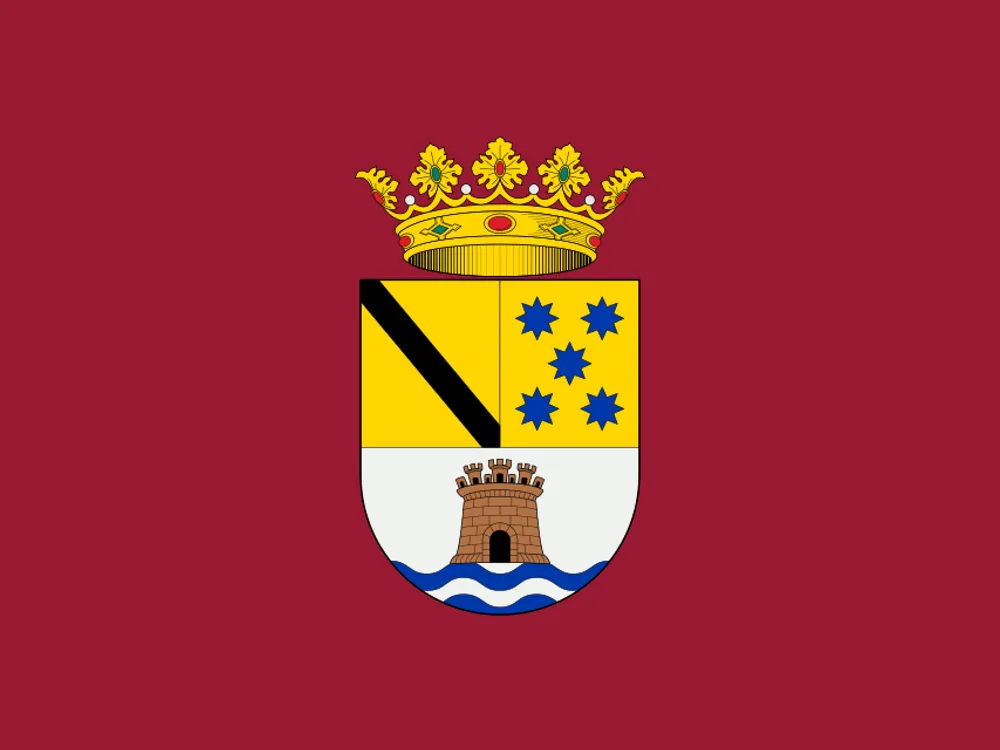
What to see in Dénia
Denia sits where the Marina Alta district opens onto the Mediterranean, with the Montgó massif closing off the municipality inland and the castle watching over the port and old town from a hill. The city's name comes from the Latin Dianium, a reference to a temple dedicated to the goddess Diana that once stood on the same promontory where the fortress rises today, built over remains going back to a naval base established there by Sertorius's forces in the 1st century BC. The castle that crowns the hill today combines those Roman foundations with Islamic and later Christian construction phases, the product of continuous use across more than two thousand years.
Capital of a Mediterranean taifa
The most distinctive chapter in Denia's history came in the 11th century, when the ruler Mujahid al-Amiri turned the city into the capital of his own taifa kingdom, which went on to annex the Balearic Islands and mint its own coinage. After the Christian conquest of 1244 and the later expulsion of the Morisco population, the municipality was granted city status in 1612 by the Duke of Lerma. Through the 19th century, the export of moscatel raisins drove rapid population growth, from just over 6,500 residents in 1860 to more than 12,000 by 1900; former raisin warehouses still shape the layout of some streets in the centre.
Port, gastronomy and the Montgó
Denia's port keeps regular sea connections to Ibiza, Mallorca and Formentera and sits alongside the Barrio de los Pescadores, where low, colourful house fronts recall the city's seafaring origins. Nearby, in the historic centre, the Iglesia de la Asunción is one of the city's main churches. In 2015, UNESCO named Denia a Creative City of Gastronomy, a recognition owed in large part to the red prawn caught off its coast. Denia is also the administrative capital of the Marina Alta district, a role that keeps its historic centre active well beyond the summer tourist season. Inland, the Montgó Natural Park, rising to 753 metres and protected since 1987, shares its territory with neighbouring Jávea, while the Cabo de San Antonio adds a marine reserve along the southernmost stretch of the coastline.
Denia's population multiplies to around 200,000 during the summer months, far above the roughly 47,000 registered residents the rest of the year, and every July the city holds Bous a la Mar, a festival of National Tourist Interest in which bulls run along a stretch of the port down to the sea.
🚆 How to get there from Alicante
Denia is the furthest destination from Alicante covered here, around 95 kilometres by road. The most comfortable way to arrive without a car is the metropolitan TRAM, combining line 1 to Benidorm with line 9, which runs the length of the Marina Alta to Denia's own station; the full tram journey takes considerably more than an hour. By car, the AP-7 motorway heading north links the two cities in a little over an hour under normal conditions. Denia also has its own port, so it's possible to arrive by ferry from other port cities as well, though not directly from Alicante.
Compare all towns by transport →
-
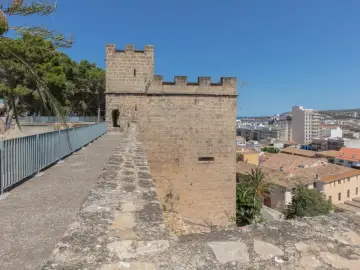 CastleCastillo de DéniaDénia — Marina Alta (Alacant)
11th-12th-century fortress built during the Muslim occupation. It retains Almohad-style towers and gates; at the top it houses an…
-
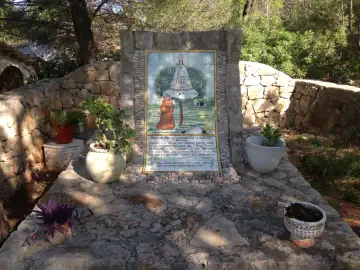 Viewpoint · FREEParque Natural del MontgóDénia — Marina Alta (Alacant)
The reserve offers hiking trails with views of the Mediterranean.
-
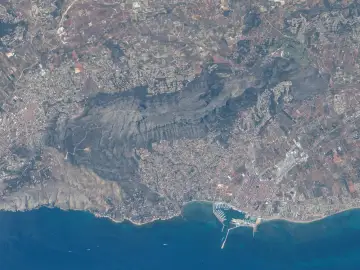 Viewpoint · FREECabo de San AntonioDénia — Marina Alta (Alacant)
The lighthouse, 163 metres tall, sits on a rocky promontory. From there you can see the Mediterranean and the sheer cliffs, and you can…
-
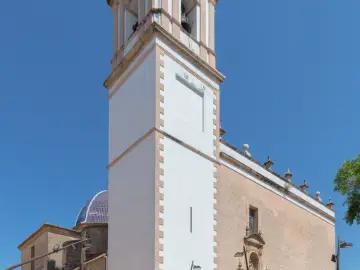 Church · FREEIglesia de la AsunciónDénia — Marina Alta (Alacant)
18th‑century temple showcasing a Renaissance and Baroque altarpiece of great artistic value.
- 🍸Cool venue · FREEBarrio de los PescadoresDénia — Marina Alta (Alacant)
Historic neighbourhood next to the port known as Baix la Mar, between the castillo (castle) and the water.
🏖️ Beaches
- 🌿Beach & nature · FREEPlatja de les Marines (Dénia)Dénia
The stretch of sand running north from Dénia's port, several kilometres of wide beach with a gentle, shallow entry, Blue Flag status and…
- 🌿Beach & nature · FREELes Rotes (Dénia)Dénia
The rocky coast south of Dénia, inside the Cabo de San Antonio marine reserve: no sand, a string of small coves between cliffs and very…
🎟️ Upcoming events in Dénia
-
 19:30Storytelling for adults with Félix AlboBiblioteca Pública Juan ChabásFREE
-
 12:00Children's Storytelling: «La Maria no té por»Biblioteca Pública Juan ChabásFREE
-
 20:00Monday Jazz David HazelCasa de la Cultura
-
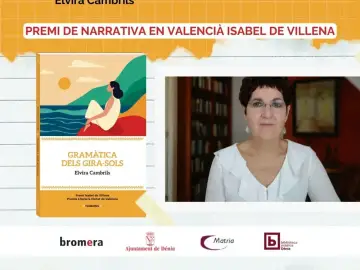 19:30Book presentation: Gramàtica dels gira-sols by Elvira CambrilsPublic Library Juan ChabásFREE
-
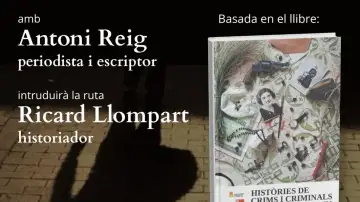 19:30A Walk Through Crime-Ridden DéniaJuan Chabás Public LibraryFREE
-
 12:00Children's storytelling with Paco Bertomeu and Davinia LekeuxJuan Chabás Public LibraryFREE
-
 19:30Talk with Juan Céspedes marking 100 years of the Fallas in DéniaBiblioteca Pública Juan ChabásFREE
-
 19:30Storytelling for adults with Coralia RodríguezJuan Chabás Public LibraryFREE
-
 19:30Storytelling for adults with Sandra RossiJuan Chabás Public LibraryFREE
-
 19:00Koinós Dénia with Paco CerdàJuan Chabás Public LibraryFREE
-
 12:00Children's Sustainable Art WorkshopJuan Chabás Public LibraryFREE
-
 19:30Talk with Pere Borrego marking 100 years of the Fallas in DéniaBiblioteca Pública Juan ChabásFREE
-
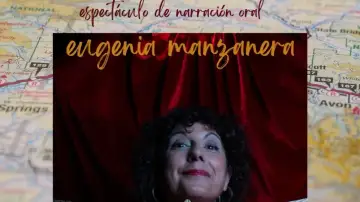 19:30Storytelling for Adults with Eugenia ManzaneraJuan Chabás Public LibraryFREE
-
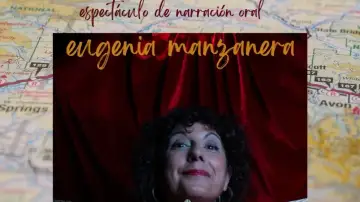 19:30Storytelling for Adults with Eugenia ManzaneraJuan Chabás Public LibraryFREE
-
 12:00Children's Storytelling with Eugenia ManzaneraJuan Chabás Public LibraryFREE
-
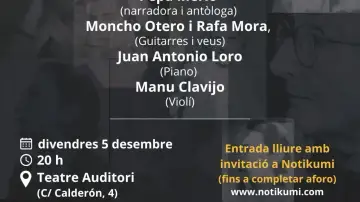 20:00Poetic-musical show "Wherever You Ask, I Will Go. Women Poets of the Generation of '27"Teatro AuditorioFREE
-
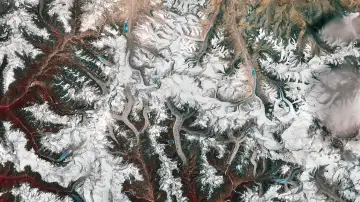 17:30International Mountain DayJuan Chabás Public LibraryFREE
Frequently asked questions
How long does the tram from Alicante to Denia take?
Considerably more than an hour, since it means combining line 1 to Benidorm with line 9 through the Marina Alta; driving via the AP-7 is noticeably faster.
Can you catch a boat to Ibiza from Denia?
Yes, Denia's port has regular sea connections to Ibiza, Mallorca and Formentera for much of the year.
What does Creative City of Gastronomy mean?
It's a UNESCO recognition Denia received in 2015 for its local cuisine, closely tied to the red prawn caught off the coast.