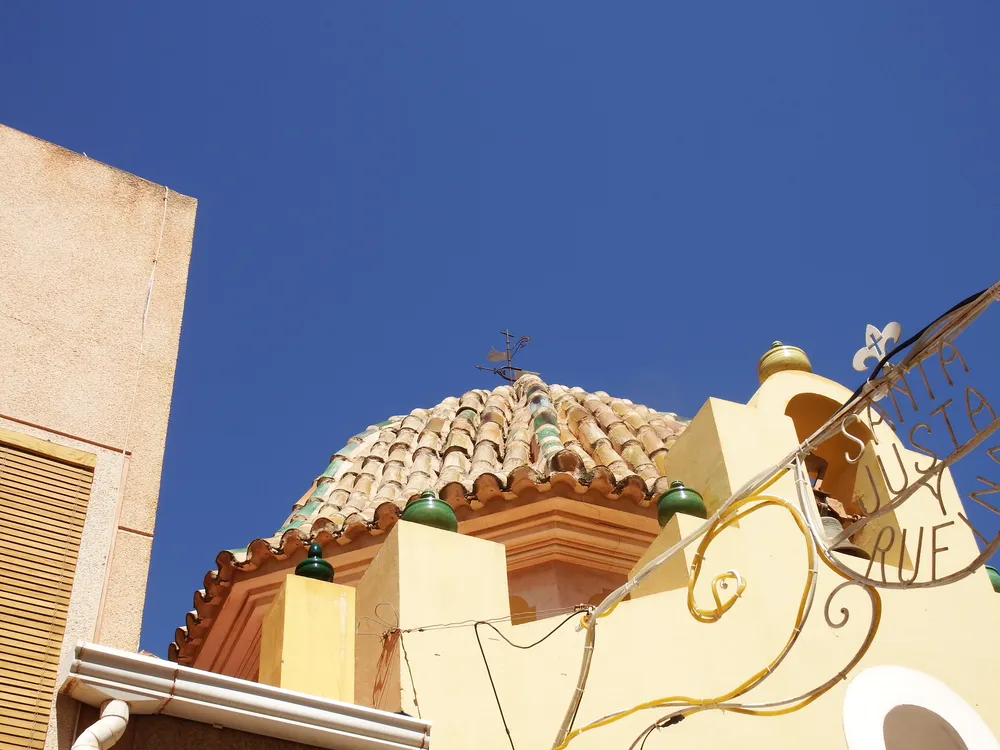
Ermita de les Santes Justa i Rufina
Hermitage built in 1821 dedicated to the patron saints of potters. Sevillian sisters from the 3rd century who worked in ceramics; tradition links pottery-making with sainthood.
The Ermita de las Santas Justa y Rufina is dedicated to the patron saints of potters, and the facade makes that clear at a glance: it is topped with green and brown ceramic jars, the same colours repeated in the glazed tiles of the dome. The building went up in 1821, was renovated in 1912, and was restored again in 1995.
History
Justa and Rufina were two Christian sisters from the 3rd century who made a living selling pottery in Seville, which is why they are venerated as patron saints of potters and ceramics traders across much of Spain. According to tradition they were martyred for refusing to give up their faith, and locals affectionately call them 'las Santas Cacharreras' (the pottery saints). In Agost, a town whose economy has revolved around clay for centuries, the dedication could hardly fit better, and their feast day is celebrated every 19 July.
What to see
The hermitage, on an almost square floor plan, is squeezed between party walls in the middle of the old town, with a dome on pendentives resting on a low drum and exterior walls painted white and yellow. It is a small building that takes only a few minutes to see, but it sums up Agost's pottery identity better than any other monument in town.
It sits a short step from the Museo de Alfarería and the pottery workshops still in operation, and forms part of the same walking route through central Agost that includes the church of Sant Pere Apòstol.
Frequently asked questions
Why is it dedicated to these two saints?
Justa and Rufina were potters in 3rd-century Seville and are the traditional patron saints of the trade, which fits Agost's ceramic identity closely.
Can you go inside?
It is a small building with limited access outside the 19 July feast day and a few other set celebrations.
How long does it take to see?
Very little, just a few minutes, though it's worth looking closely at the ceramic details on the facade and dome.
Comments
Sign in with Google to comment and rate
Be the first to comment.