Casas-Cueva
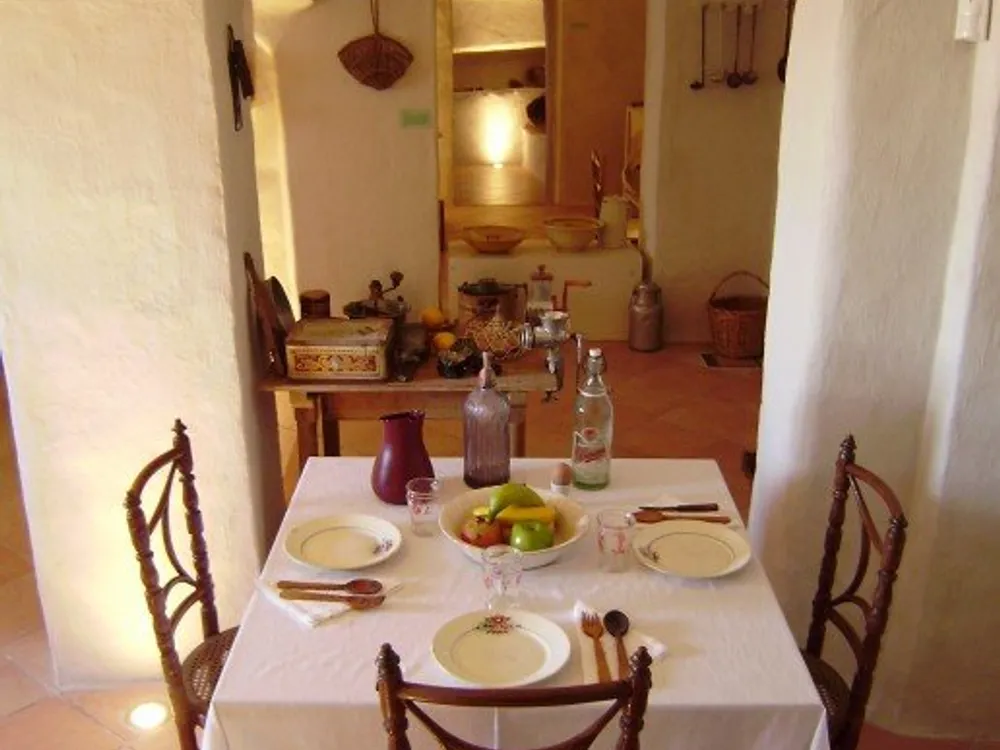
Dwellings carved into the medieval castle wall in the late 19th century, with a constant temperature of 20°C year-round. A museum recreating 20th-century domestic life and traditional crafts.
The Casas-Cueva were dug out in the late 19th century straight into the wall of Petrer's castle, making use of the existing fortification. The land belonged at the time to the parish of San Bartolomé, which owned the castle hill and authorised these cave dwellings; their number grew over the following decades into the early 20th century. Rock-cut housing of this kind, associated with lower-income families, appeared in several parts of south-eastern Spain in that period; in Petrer it concentrated on the castle hillside, making use of ground that was otherwise hard to build on. Several of these houses survive grouped along the same stretch of wall, giving an unusually complete picture of the type within the district.
They were simple houses, with just the rooms a family needed, and their main practical appeal was climatic: cut into the rock, they hold a stable temperature commonly described as between 18 and 20°C year-round, with little difference between summer and winter.
Following restoration, one of these dwellings has been incorporated as an exhibition space of the Museo Dámaso Navarro, furnished with everyday objects from the late 19th and early 20th centuries that give a sense of what life inside was like. Since the space is cut into the hillside, getting around involves steps and slopes, which is worth bearing in mind for visitors with reduced mobility. The visit pairs naturally with the Castillo de Petrer just above it, and with the Iglesia de San Bartolomé, the former owner of this land.
It is one of the most recognisable sights in Petrer's old town, comparable in a way to other heritage sites in the Vinalopó Mitjà district such as El Monastil in Elda, even though the two differ completely in period and purpose.
Frequently asked questions
Is it free to visit the Casas-Cueva?
Yes, entry to the Casas-Cueva is free.
How long does a visit take?
The visit is brief, around twenty to thirty minutes.
Is it interesting for children?
Yes, stepping inside dwellings cut into the rock and seeing old domestic objects tends to catch children's attention.
Comments
Sign in with Google to comment and rate
Be the first to comment.