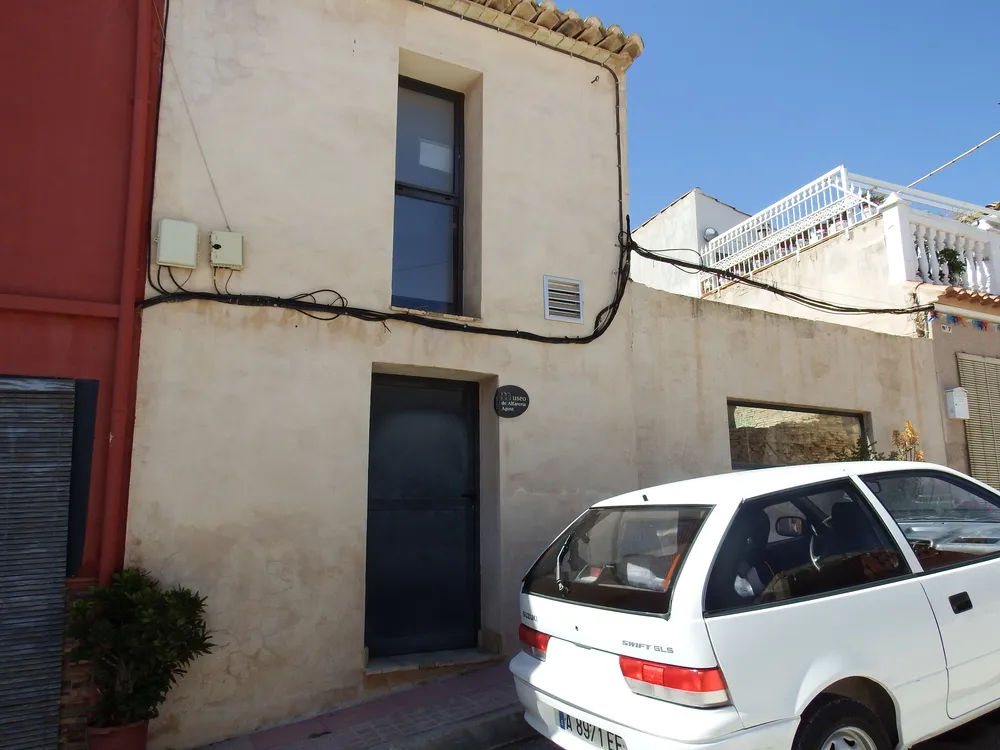
Museo de Alfarería
Pottery museum founded 1981 in an early-20th-century ceramic factory complex. Collections of traditional water jugs, whistling figurines, and local pottery.
The Museo de Alfarería in Agost occupies the former ceramics factory that Severino Torregrosa opened in 1902, which stayed in operation until 1975. The building still holds its drying room, workshop, storerooms, clay-settling pools and Moorish-style kilns intact, making it a direct record of how pottery was made in the town before mechanisation.
History
The museum was founded in 1981 on the private initiative of German ethnologist Ilse Schütz, who owned and ran it for nineteen years, until the Agost town council took over staffing and maintenance costs in March 2000. The earliest document mentioning pottery-making in Agost dates to 1277, and several of the families still throwing clay in the town today have been documented at the trade since the 18th century.
What to see
The collection centres on the traditional botijo, a white clay water jug thrown by hand, tempered with salt and fired in a Moorish-style kiln, which Agost exported for generations to other parts of Spain and North Africa. Alongside the botijos are whistle figurines and other domestic pieces documenting the trade from prehistoric times through the 20th century. The visit also takes in the original industrial installations, from the potter's wheels to the kilns, unusual for a museum of this size.
It is a good starting point for understanding the pottery workshops still active in town, and pairs well with a visit to the Ermita de las Santas Justa y Rufina, dedicated to the trade's patron saints. Both form part of the same route through town, rounded off by the church of Sant Pere Apòstol in the centre of the old quarter.
Frequently asked questions
Is the Museo de Alfarería in Agost a paid site?
Yes, entry is ticketed, though the visit is short and pairs well with a stop at the town's active pottery workshops.
What was made at the old factory?
Mainly white-clay botijos and jugs, fired in Moorish-style kilns and exported to other parts of Spain and North Africa.
How long does a visit take?
Between thirty and forty-five minutes, depending on how much time you spend on the original preserved installations.
Comments
Sign in with Google to comment and rate
Be the first to comment.