Museu Arqueològic i Etnogràfic Soler Blasco
Housed in the palace house of Antoni Banyuls, the Soler Blasco Museum displays 13 rooms of collections from the Neolithic onwards. Highlights include the Iberian Treasure of Jávea—a gilt bronze diadem—and a library of nearly 4,000 volumes of local archaeological research.
The Museu Arqueològic i Etnogràfic Soler Blasco occupies the Banyuls family's casa-palau, a noble house from the first half of the 17th century in the old town of Jávea. Its façade in local tosca sandstone, with the characteristic open galleries on the upper floor, is one of the best-preserved examples of manor architecture in the Marina Alta district.
A house reshaped over time
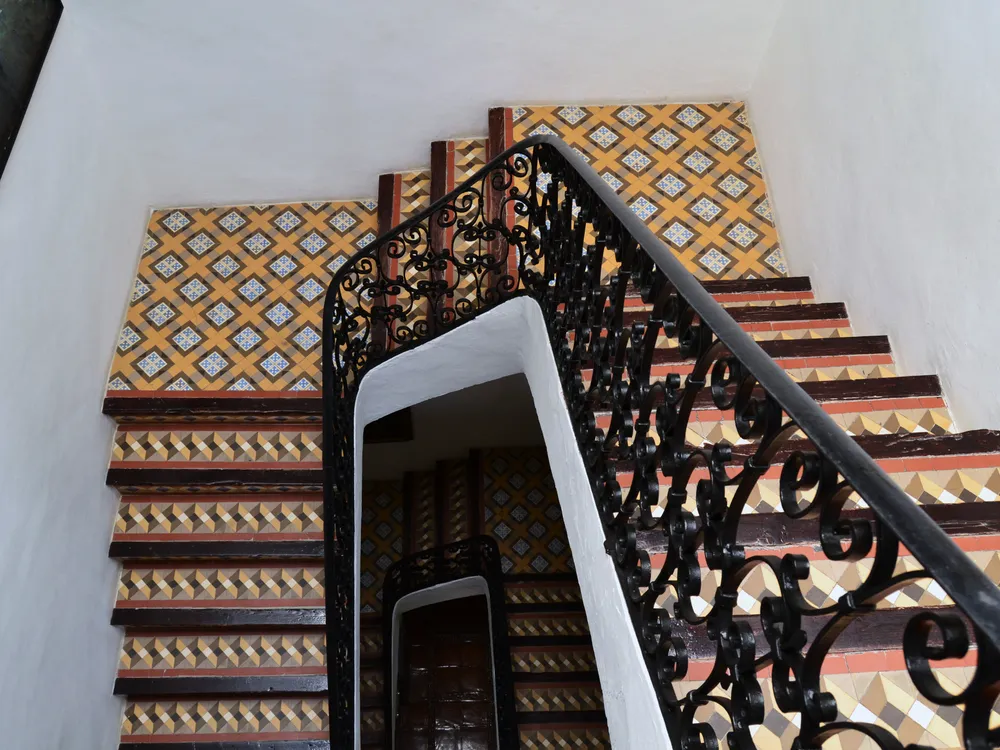
The palace, originally three storeys, underwent a major interior renovation in the second half of the 19th century, when the era's economic prosperity led to updating much of its layout. Even so, earlier details survive, such as the ceramic floor of Room VI, decorated with green-and-white enamelled tiles known as "mocadorets."
From the Neolithic to the 19th century
The upper floor is devoted to underwater archaeology, with an extensive collection of pieces recovered off the coast of Jávea spanning from the 7th century BCE to the 19th century CE. Among them is a gilded bronze replica of the Iberian Treasure of Jávea, a set of gold and silver jewellery found in 1904 in the Lluca district: a diadem weighing more than 130 grams, along with necklaces and bracelets of Iberian workmanship showing orientalising influence, dated to the 4th century BCE. The original treasure is kept at the National Archaeological Museum in Madrid, so what is on display here is a faithful copy rather than the piece itself.
The other floor holds a very different collection: 32 works donated by local painter J. B. Segarra Llamas (1916-1994), in oil, charcoal, graphite, sanguine and watercolour, along with personal items that belonged to the artist.
Admission is free, and the museum pairs well with a walk through the Casco Antiguo de Xàbia, where it stands, or a visit to the Iglesia-Fortaleza de San Bartolomé, a few minutes' walk away.
Frequently asked questions
Is the Museu Soler Blasco free?
Yes, admission is free.
Can you see the original Jávea treasure?
No, the original piece is kept at the National Archaeological Museum in Madrid; Jávea displays a gilded bronze replica.
What periods does the collection cover?
From the 7th century BCE to the 19th century, mainly through underwater archaeology recovered off the coast.
Comments
Sign in with Google to comment and rate
Be the first to comment.