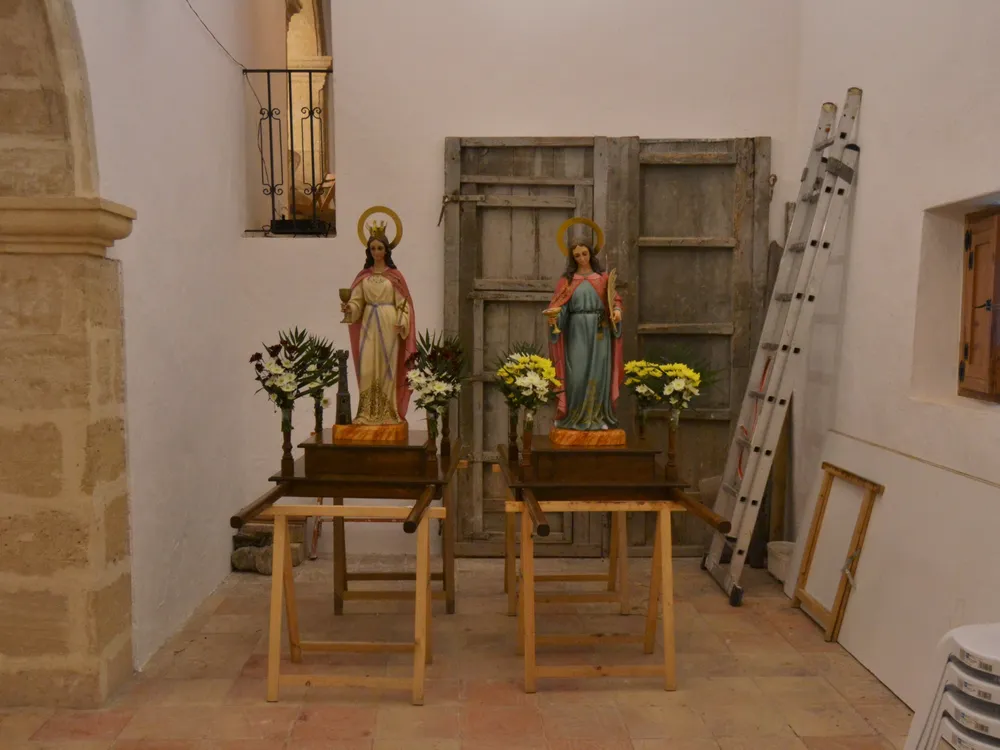
Ermita de Santa Llúcia i Santa Bàrbara
At 163 meters of height, the Santa Llúcia hermitage crowns the highest point of Jávea. The Santa Llúcia bell, cast in 2003, calls for the annual pilgrimage on December 13, when hundreds of residents and visitors ascend in a centuries-old tradition.
The Ermita de Santa Llúcia i Santa Bàrbara sits on the highest point in Jávea, 163 metres above sea level, on a promontory northwest of the town centre. It is a plain, single-nave rectangular building, probably built in the early 16th century, though the earliest documented references to it date only from the 18th century.
History and devotion
In medieval times, Saint Lucy was invoked against eye ailments, an association that comes from her name, linked to light. The bell tower holds a bell cast in 2003 that replaced an earlier one dating from the 15th century. The hermitage, dedicated jointly to Saint Lucy and Saint Barbara, is now municipal property and has been kept in good condition through recent restoration work. Every 13 December, Jávea holds its best-known pilgrimage: townspeople climb in procession from the centre to the hermitage to the sound of the dolçaina and tabalet drum, a Mass is celebrated, and the day closes with hot chocolate handed out to everyone who made the climb.
Visiting
The hermitage's appeal lies as much in the views as in the building itself: from the promontory, most of Jávea's municipal area is visible, with the Cap de Sant Antoni toward the sea and the Montgó massif behind. The path up zigzags through the hillside and is more comfortable early or late in the day, out of the strongest sun. It combines well with a visit to the Casco Antiguo of Jávea or another of the area's viewpoints, such as the Mirador del Cap de la Nau, on the coast. The path up forms part of a signposted hiking route, popular with walkers from the area even outside the pilgrimage date, and comfortable shoes help year-round since the surface is uneven in places and offers little shade on sunnier days.
Frequently asked questions
Is it free to visit the hermitage?
Yes, access is free year-round.
How long does it take to walk up from town?
The zigzagging path takes around 20 to 30 minutes on foot depending on pace, and it's also possible to drive close to the hermitage.
What's the best time to visit?
The views work at any time of year, but 13 December, the day of the Santa Llúcia pilgrimage, is when the site is at its most distinctive.
Comments
Sign in with Google to comment and rate
Be the first to comment.