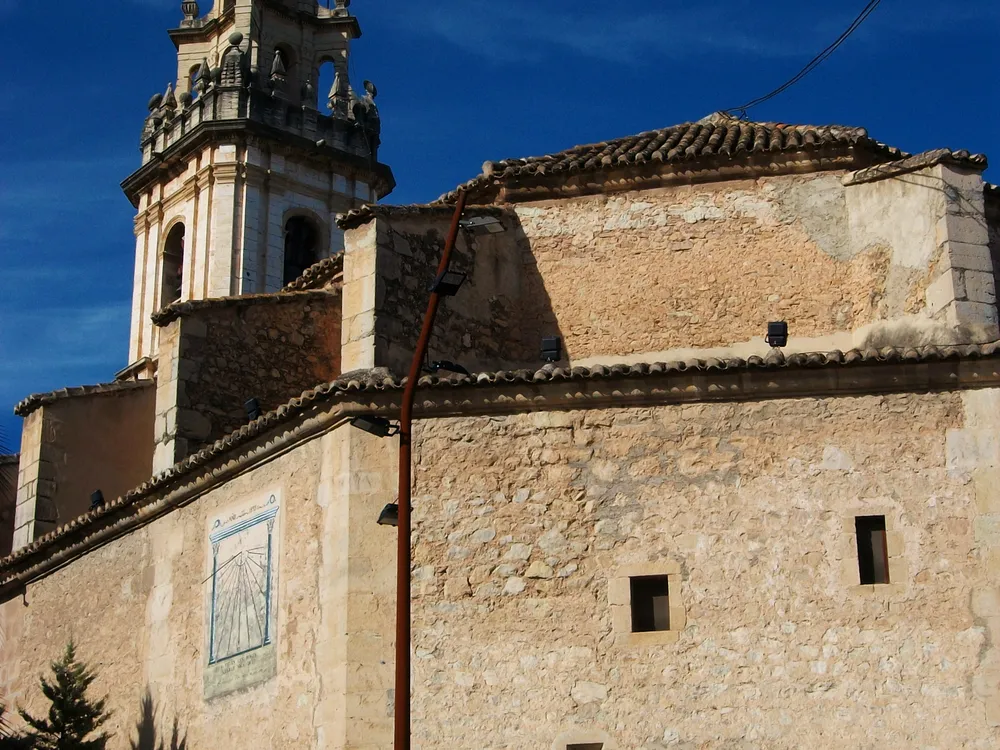
Iglesia Arciprestal de la Asunción
16th-century Renaissance church built 1599–1614 on the ruins of a mosque. Baroque stone bell tower (1700) with a 15th-century Gothic altarpiece.
The Iglesia Arciprestal de la Asunción is Pego's main church, built in Renaissance style over the remains of an earlier church that had itself occupied the site of the town's former Uxola mosque. Work began in 1599 under French architect Joan Cambra and was largely finished by around 1614 under Pere Joan Mir, though the building was not fully completed until the 18th century, with the addition of the Baroque bell tower and the Communion chapel.
History
An earthquake in 1644 caused significant damage and forced a partial rebuild, one of the episodes behind the church's eclectic style, which layers historicist, neoclassical and neo-Gothic elements added over the centuries. Despite that mix of interventions, the church holds artwork of real value, including a 15th-century Gothic altarpiece of the Virgin of Hope, attributed to Antoni Peris and Jaume Mateu, and a small 14th-century altarpiece known as the double Verónica, showing the faces of Christ and Mary.
What to see
The stone bell tower, raised around 1700, is the church's most recognisable feature from almost anywhere in Pego's old town, and it works as a landmark for getting your bearings before heading to other sights such as the Ecce Homo chapel or the ruins of the Castell d'Ambra on the hill above town. The interior, a rectangular nave with side chapels, can be visited outside religious services, and the stop pairs well with a walk through the narrow, medieval-origin old quarter, before rounding off the day with the wetlands of the Marjal de Pego-Oliva on the edge of town.
Frequently asked questions
Is the church free to visit?
Entry is ticketed outside service hours, though it is free to attend Mass and religious celebrations.
What survives from the original building?
The 15th-century Gothic altarpiece of the Virgin of Hope and a small 14th-century altarpiece known as the double Verónica are the oldest pieces to have survived later renovations.
How long does a visit take?
Seeing the interior takes twenty to thirty minutes, and it pairs easily with a walk through Pego's old town in the same morning.
Comments
Sign in with Google to comment and rate
Be the first to comment.