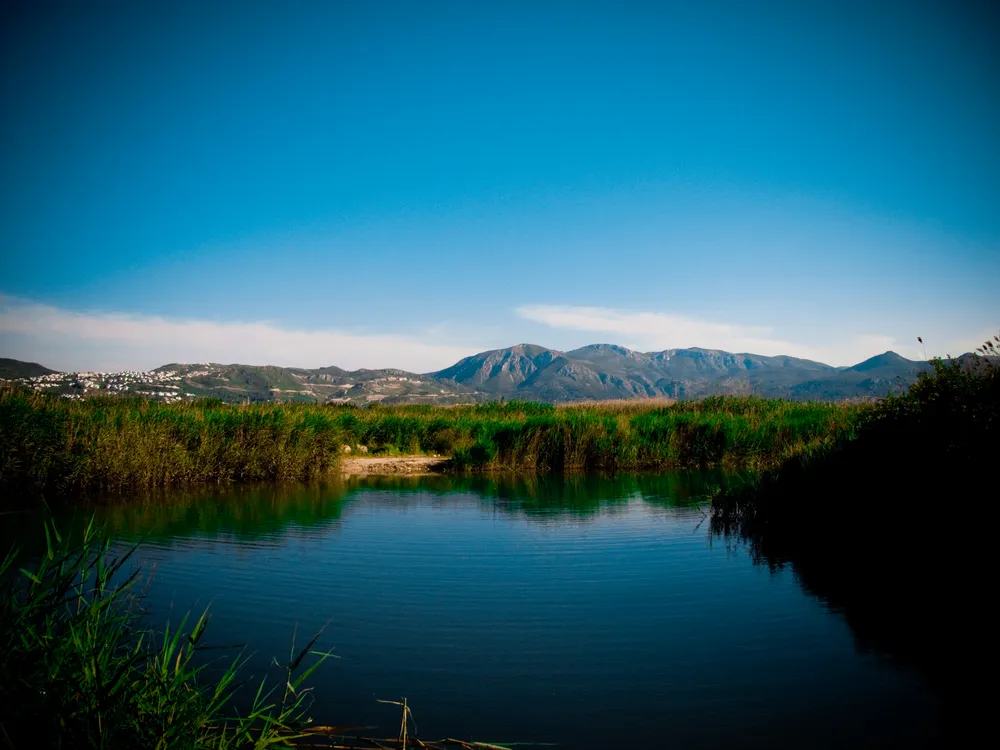
Marjal de Pego-Oliva
Natural park covering 1,255 hectares, established 1994. Former lagoon with traditional rice cultivation; refuge for the Samaruc, an almost-extinct fish species.
The Marjal de Pego-Oliva is a 1,255-hectare wetland spread across the municipalities of Pego and Oliva, declared a natural park in 1994. It occupies what was once a coastal lagoon, now a mosaic of reed beds, rice paddies and pools crossed by a network of irrigation channels, among the last significant wetlands left on the coast of the Comunitat Valenciana.
A refuge for the samaruc
The park holds one of the best natural populations of the samaruc, a small freshwater fish found almost exclusively in the Comunitat Valenciana and at serious risk of extinction. Clean water, marsh vegetation and the absence of invasive species in certain stretches of the wetland explain why this has remained one of the last refuges for the species within its original range.
Rice and landscape
Rice growing reached the marjal in the Andalusi period and remains the dominant land use today, with local varieties such as bombón and pegonil alongside the more widespread bomba. That landscape of flooded paddies also feeds the local cuisine, with dishes such as arroz al horno (oven-baked rice) and arroz con costra common in the surrounding villages. The park can be explored on marked trails and from bird-watching hides without a guide, though binoculars are worth bringing if birdwatching is the goal.
The best time to visit depends on what you are after: autumn and winter bring the busiest migratory bird activity, while summer shows the rice paddies at their greenest. Access is free, and a visit is usually combined with the old town of Pego, with its archpriest church and the dome of the Ecce Homo chapel, or with the climb up to the Castell d'Ambra, which overlooks the plain from the neighbouring hill.
Frequently asked questions
Is the Marjal de Pego-Oliva free to visit?
Yes, access to the natural park's trails and bird-watching hides is free.
When is the best time to see birds?
Autumn and winter bring the most migratory and wintering bird activity.
Is it suitable for children?
Yes, the trails are flat and accessible, though it is worth avoiding the hottest hours in summer since some stretches have little shade.
Comments
Sign in with Google to comment and rate
Be the first to comment.