Baños de la Reina
Roman-era pool and canal complex by the coast. Archaeological remains of Roman occupation where visitors can bathe among the ruins and directly explore the Mediterranean coastal history.
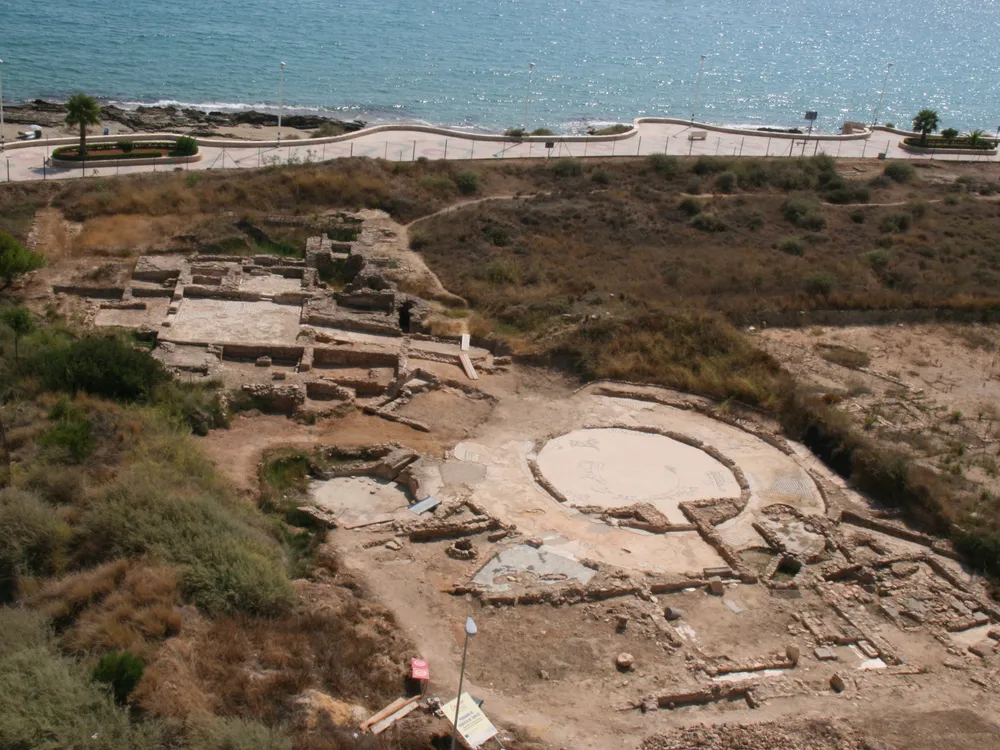
Baños de la Reina sits on the shoreline beside the Peñón de Ifach, a Roman archaeological site that combines the remains of a palace, a bath complex and a fish farm. The structures date from the late 2nd or early 3rd century AD and stayed in use until the early 5th century, when the settlement was abandoned.
What survives
The site includes a Roman palace with a courtyard and eight rooms that still held marble and mosaic fragments, baths covering roughly 500 square metres with a cold pool cut into the rock, and a fish farm made up of six basins linked to each other and to the sea by channels carved into the stone. Traces of a waterwheel, several cisterns and a nearby necropolis are also visible. The ruins were discovered in 1610 and first excavated in 1792 by the naturalist Antonio José Cavanilles; some of the mosaics recovered then are now held at the MARQ museum in Alicante.
Swimming among the ruins
Unlike most Roman sites, the sea still fills the old fish-farm basins here, and it's common to see people snorkelling between the stone walls, where clear water reveals small fish, octopus and sea urchins. Access is free, along the promenade that runs past Playa del Arenal-Bol next to Calpe's salt flats. The name refers to a legend that a Moorish queen once bathed here.
The site is within walking distance of Calpe's old town and monuments such as the medieval walls, the Church of the Virgen de las Nieves and the Torreó de la Peça, making it easy to combine with a walk through the rest of the old quarter.
Frequently asked questions
Is Baños de la Reina free to visit?
Yes, access is free and open at any time along the seafront path.
Can you swim among the Roman ruins?
Yes, the old fish-farm basins are still filled by the sea and it's a popular spot for swimming and snorkelling among the stone walls.
What's the best time to visit?
The water is more comfortable for swimming in the warmer months, though the site itself can be visited year-round.
Comments
Sign in with Google to comment and rate
Be the first to comment.