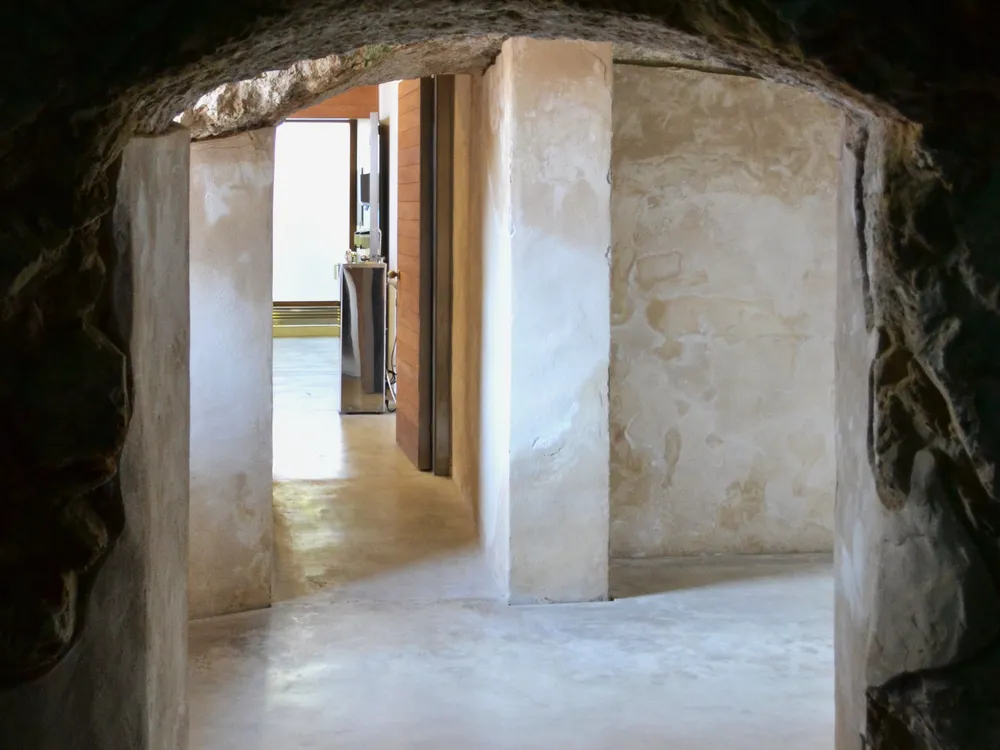
Pozos de Garrigós (Refugio Antiaéreo nº 13 - Museo de Aguas)
Medieval cisterns with an 800,000-litre capacity that collected rainwater from Benacantil until 1898. Converted to an air-raid shelter during the Civil War, they are now a museum telling the story of water in the city, maintaining a naturally constant temperature.
The Pozos de Garrigós are a system of cisterns cut into the southwestern slope of Mount Benacantil, next to the entrance of the Parc de l'Ereta, in the historic centre of Alicante. They were originally built to collect rainwater running off the mountain to supply the city, a system remodelled in 1863 to a design by master builder Antonio Garrigós, who gave the site its name.
From cisterns to wartime shelter
The three tanks open to visitors today have circular or oval floor plans and together held a combined capacity of more than 800,000 litres. They supplied the city until the late 19th century, when new water sources made them obsolete; in the early 20th century part of the complex was used as housing for the Garrigós family, and during the Civil War it was converted into an air-raid shelter for the neighbourhood.
The Museum of Water
The space now works as a cultural centre dedicated to the history of water in Alicante: the ground floor traces the evolution of the city's water supply, and the upper floor covers how the city dealt with periods of drought, centred on the building of the Canal del Cid. The interior keeps a steady temperature year-round thanks to being underground, and a visit pairs well with the climb up to Castillo de Santa Bárbara or a walk through the Barrio de Santa Cruz, both just steps away. It's the kind of stop that regularly turns up on lists of the city's free museums.
Frequently asked questions
Is it free to visit the Pozos de Garrigós?
Yes, admission to the museum is free.
How long does a visit take?
Around 30 to 45 minutes is enough to see both floors of the museum at an easy pace.
Is it a good place to visit with children?
Yes, the cool underground setting and the interactive museum format tend to work well with children, though the stairs down to the cisterns aren't suitable for strollers.
Comments
Sign in with Google to comment and rate
Be the first to comment.