Barrio de Santa Cruz
Neighborhood founded in the 13th century on the ruins of a mosque, with whitewashed houses and flower pots in steep alleys. Known as Alicante's cradle, it offers Mediterranean views from its terraces on the slopes of Benacantil.
The Barrio de Santa Cruz climbs the slope of Monte Benacantil, below the Castillo de Santa Bárbara, and is the oldest quarter of Alicante. It traces back to the Muslim settlement that, after the early 8th-century Pact of Teodomiro, organised itself around the fortress as the medina of Al-Laqant, complete with its own aljama community centre, market and several mosques.
Streets that climb the rock
When Christian forces retook the area in the 13th century, the population was already living behind a wall that ran down from the fortress, and the street layout has stayed much the same ever since: narrow lanes, staircases and tight corners that follow the shape of the hillside, today painted white and decorated with pots of flowers on balconies and façades. The Basílica de Santa María, the city's oldest church, stands right at the quarter's lower edge, built over the remains of one of those medieval mosques.
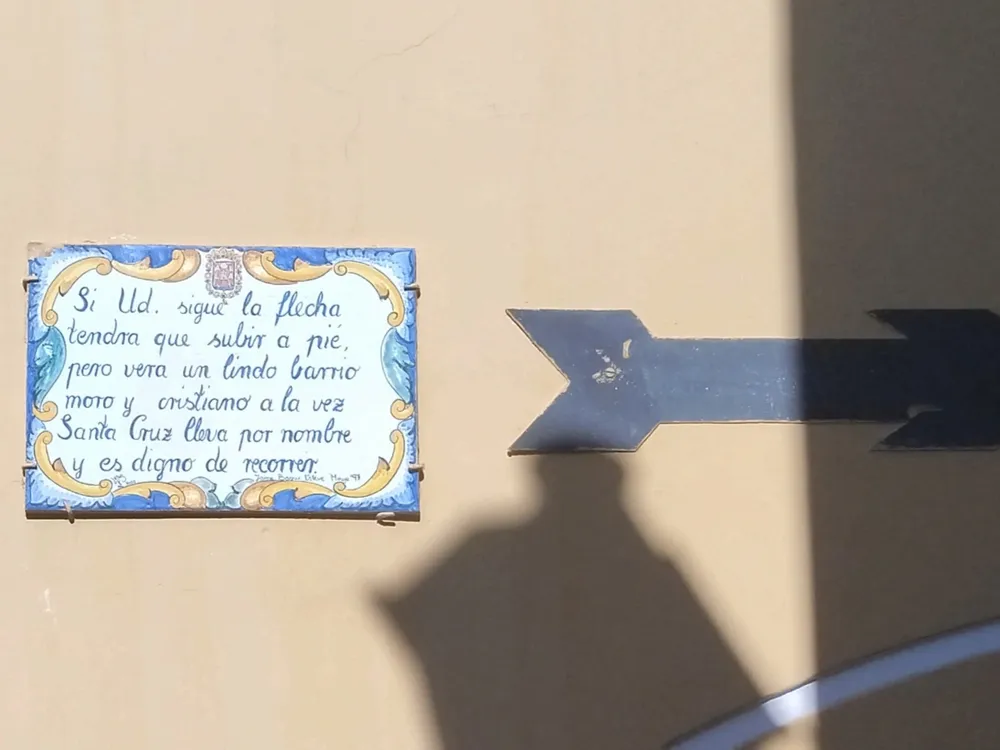
The neighbourhood is best explored on foot and without hurrying, following the stairs upward: almost all of them eventually lead to a spot with a view of the Mediterranean or to the Concatedral de San Nicolás. The steep slope and steps make it an awkward route with a pushchair or wheelchair, and shoes with good grip are worth wearing, since many streets are effectively flights of stairs. At dusk, when the sun catches the white façades side-on, the quarter draws the most photographers, though it rewards an unhurried visit at any hour.
Frequently asked questions
Is visiting the Santa Cruz district free?
Yes, it's a residential neighbourhood of public streets, with no cost to walk through.
Is the district accessible for strollers or wheelchairs?
Not particularly: the slope is steep and many streets are really flights of steps.
What's the best time to visit?
Late afternoon, when the light hits the white façades at an angle, or early morning to avoid the heat on the climbs.
Comments
Sign in with Google to comment and rate
Be the first to comment.