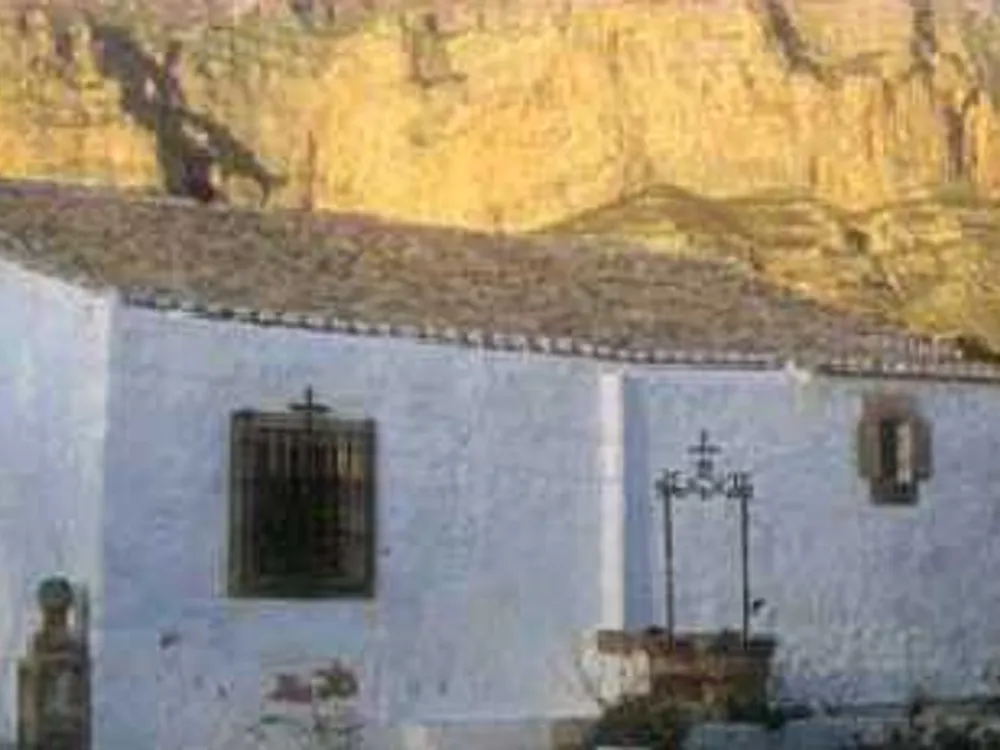
Ermita del Pópul
Hermitage of the Conquest from the 14th century, the Pópul holds an interior with ogival arch that evokes the Reconquista. A 17th-century painting representing the Virgin of Pópul with San Joaquín and Santa Ana survives inside, though deteriorated. Today it shelters shared worship between Christian traditions.
The Ermita del Pópul stands in open countryside on the southern slope of Montgó, on the road toward Jesús Pobre and outside the built-up area of Jávea. It is one of the so-called "conquest hermitages," built between the 14th and 15th centuries after the Christian conquest of the area in the 13th century, and its rough stone construction places it among the oldest in the area.
History
Like the rest of Jávea's conquest-era hermitages, it follows a simple layout: a single nave, a gabled roof carried on diaphragm arches, and one entrance door. Quarters for a hermit were added in the 18th century, and a sacristy in the 19th. Beside the altar, a small pointed-arch niche from the 15th-16th centuries survives, now holding a cypress-wood statue by local sculptor Juan Bautista Devesa, known as "el Santeret," carved after the Spanish Civil War, during which the building suffered serious damage. It stood abandoned until 1972, when it was restored to host worship shared between the Catholic and Anglican churches, an unusual arrangement among the area's hermitages.
Visiting
Inside, the pointed arch and the plainness typical of the area's medieval hermitages remain largely untouched, with very little added decoration. The setting, well within the Montgó Natural Park, is part of the appeal in itself: there is no development nearby, only terraced fields, pines and the massif itself, and comfortable footwear helps since the final stretch is on foot. Another Jávea hermitage with a very different history, the Ermita del Calvario, sits beside the road into town. Anyone wanting more of the area's conquest-era religious heritage should also see the Iglesia-Fortaleza de San Bartolomé, in the Casco Antiguo, Jávea's best-known example. Comfortable shoes are worth packing regardless of season, since the final approach runs over uneven, unpaved ground with little shade along the way.
Frequently asked questions
Is the Ermita del Pópul free to visit?
Yes, access to the site is free.
Can you drive there?
You can drive close to the site, but the final stretch has to be done on foot along a dirt track.
Why do Catholics and Anglicans share worship at this hermitage?
Since its restoration in 1972, the building has hosted services for both congregations, an arrangement uncommon among hermitages in the Comunitat Valenciana.
Comments
Sign in with Google to comment and rate
Be the first to comment.