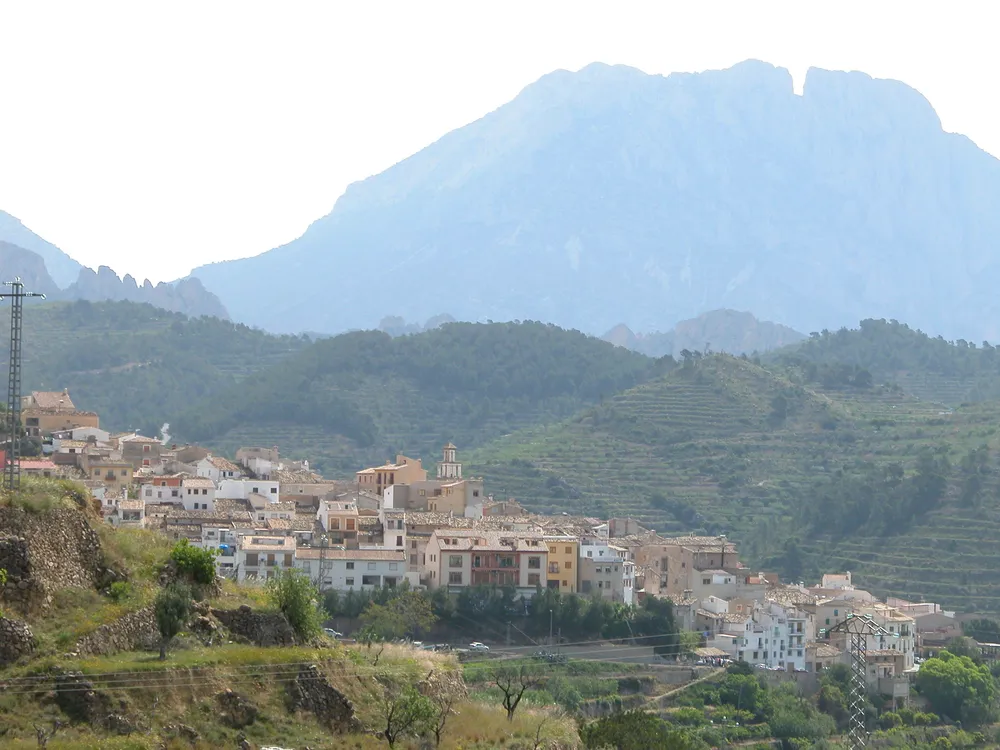
What to see in Sella
Sella is a mountain village of just over 600 people, set into the southern foothills of the Sierra de Aitana in the interior of the Marina Baixa. The original settlement was a 13th-century Muslim fortress that went on to hold a sizeable Morisco community: the 1609 census, the same year Felipe III decreed their expulsion, counted 115 houses in the village. Afterward, Sella was resettled with families from Agres, Alicante, Cocentaina and Guadalest.
History
The church of Santa Ana became an independent parish in 1574, even before the Morisco expulsion, which places a Christian presence in the village as early as the 16th century. On the high ground above the village, the remains of an Arab fortress eventually gave way to the hermitage of Santa Bárbara, recognised as a cultural heritage site in 2001 and still the setting for a December pilgrimage.
What to see
Sella's main draw is water: several springs — Font Major, Font del Pi and Font de l'Alcàntera — feed irrigation channels and old mills that can be explored on foot along the Ruta del Agua, a roughly six-kilometre circular route suited to the whole family. The trail passes the Molí d'Álvaro, the only one of the village's three historic mills still standing restored, and ends at clear water pools that are especially appealing after spring or autumn rain. For something more physical, Sella's climbing area is a well-known reference point for climbers in inland Alicante, and the mountainous surroundings also draw paragliders.
The village's population decline, which peaked at over 1,800 residents in the late 19th century, has eased in recent decades thanks partly to inland tourism: around 14% of residents today are foreign-born, mostly British and German. The mix of gentle water-side walking, climbing and defensive heritage makes Sella a natural stop for anyone visiting neighbouring Guadalest and wanting to extend the trip through the Marina Baixa interior. The tower of the Baron's Palace, dating from the 16th century and protected since 1997, and the Barranc de l'Arc ravine running through the municipality round out its heritage. The patron-saint festivities honouring the Virgen de la Aurora take place in October, drawing smaller crowds than the December pilgrimage but just as deeply rooted among residents, a sign of how closely village life here still follows a slower calendar than the busy coast just a short drive away, a pace of life that has changed little even as the wider Marina Baixa has grown around it.
🚆 How to get there from Alicante
Sella lies inland in the Marina Baixa, a little over 40 kilometres from Alicante. The most practical way in is by car, combining the A-7 motorway or the CV-70 road to Vila Joiosa with the CV-770, which climbs inland for about 16 kilometres up to the village. There's no direct public transport running frequently enough for occasional visitors, so nearly all visits happen by private vehicle. The access road is a mountain route, with bends but in good condition, and the drive up from the coast usually takes about an hour including the final climb. Many visitors pair the trip with a stop in Guadalest on the same road, since both villages share the same approach from the coast.
Compare all towns by transport →
- 🍸Cool venueZona de EscaladaSella — Marina Baixa (Alacant)
Sella is one of the most renowned sport-climbing destinations in the southeastern Iberian Peninsula.
-
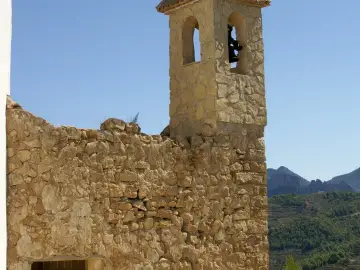 CastleCastell de Santa BàrbaraSella — Marina Baixa (Alacant)
Medieval castle designated as a cultural asset of interest. Located at a strategic position with a hermitage dedicated to Santa Bàrbara…
-
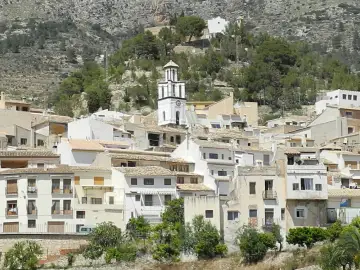 ChurchIglesia de Santa AnaSella — Marina Baixa (Alacant)
Traditional parish church on the slopes of Serra d'Aitana. An example of religious architecture in a small rural mountain municipality.
Frequently asked questions
What is Sella's Ruta del Agua?
A roughly six-kilometre circular route past springs, irrigation channels and old mills, suitable for the whole family.
Is Sella good for climbing?
Yes, its climbing area is a well-known reference point for climbers in inland Alicante, alongside other mountain activities like hiking and paragliding.
When is the best time to visit Sella?
Spring and autumn, especially after rain, are the best times to see the springs and pools at their fullest.