What to see in Guadalest
El Castell de Guadalest sits on a limestone outcrop over 570 metres above sea level, deep in the Marina Baixa district and ringed by the Aitana, Xortà and Serrella mountain ranges. With just over 280 residents, it is one of the smallest municipalities in the Comunitat Valenciana, yet it draws far more visitors each year than its population would suggest. The settlement splits into two distinct parts: the lower quarter spread beneath the rock, and the walled enclosure on the summit, of Islamic origin, reached through a tunnel cut into the stone beside the Portal de San José.
History
The castle is documented from the 13th century, when James II of Aragón granted it as a fief to Bernardo de Sarriá in 1293. It later passed to the Crown, and in 1543 Charles I created the marquisate of Guadalest for Sancho de Cardona, whose descendants governed the valley for generations. After the expulsion of the Moriscos in 1609, the valley was resettled with colonists from other parts of the kingdom. Two disasters shaped the site as it looks today: the 1644 earthquake, which ruined much of the fortress, and an explosion during the War of the Spanish Succession in 1708 that left only fragments of the Castillo de San José standing. The whole ensemble was declared a historic-artistic site in 1974 and now belongs to the Los Pueblos Más Bonitos de España association of villages.
What's in the village
The most photographed image of Guadalest is its freestanding bell tower, a square structure detached from the parish church that crowns a rock above the lower quarter and appears on most postcards of the Marina Baixa. Inside the walled enclosure, a cluster of small, oddly specific museums — miniatures, salt and pepper shakers, dolls' houses — occupy former manor buildings alongside the old dungeon and a small cemetery cut into the summit rock. Several viewpoints, including the one at the Plaça de Sant Gregori, look out over the Guadalest reservoir, built between 1953 and 1971, its turquoise water standing out against the grey of the surrounding sierra.
Outside the busiest hours, the valley is worth exploring on foot along the paths that link Guadalest to nearby hamlets, with stops at natural viewpoints such as the Penyó de l'Alcalà. The municipality's economy today runs almost entirely on tourism: hospitality, leather-goods and souvenir shops, and the museums that fill much of the walled quarter.
🚆 How to get there from Alicante
Guadalest lies inland in the Marina Baixa district, a little over an hour's drive from Alicante. The usual route leaves the city on the AP-7 motorway heading north and joins the CV-70 road at Callosa d'en Sarrià, from where a winding mountain road climbs into the valley. There is no train station or tram stop in the municipality; travellers relying on public transport generally combine the coastal tram to Benidorm with a connecting bus inland, a journey considerably longer than driving. Most organised day trips from the coast include Guadalest as one stop on a wider route through the province's mountainous interior.
Compare all towns by transport →
-
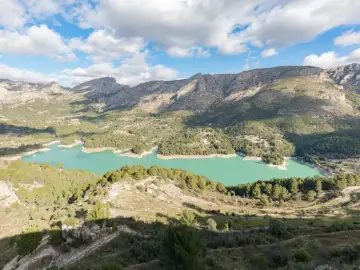 Beach & nature · FREEEmbalse de GuadalestGuadalest — Marina Baixa (Alacant)
Reservoir created in 1969 for irrigation, with turquoise waters surrounded by cliffs.
-
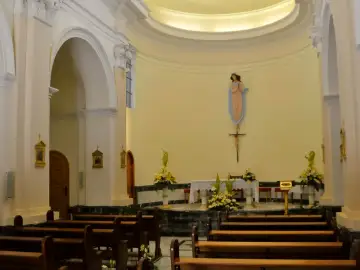 Monument · FREEIglesia de Nuestra Señora de la Asunción y CampanarioGuadalest — Marina Baixa (Alacant)
Baroque church rebuilt in 1962 after destruction from the War of Succession.
-
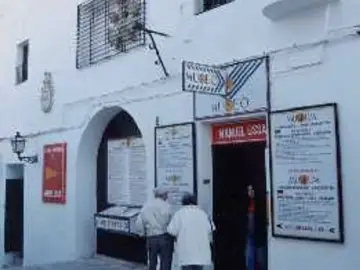 MuseumMuseo de Microminiaturas "Manuel Ussá"Guadalest — Marina Baixa (Alacant)
Collection of microsculptures by Manuel Ussà created without breathing, between heartbeats.
- 🏔️Viewpoint · FREEMirador de la Plaça de Sant GregoriGuadalest — Marina Baixa (Alacant)
Lookout that opens over a cliff from the heart of the medieval citadel.
-
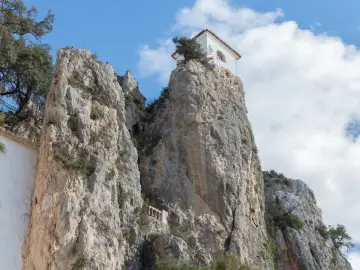 Church · FREEEl Campanario (campanario exento de Guadalest)Peñón rocoso sobre el casco antiguo, El Castell de Guadalest
Cylindrical and independent bell tower that stands alone on a rocky outcrop, appearing as the bow of a ship suspended in the void.
-
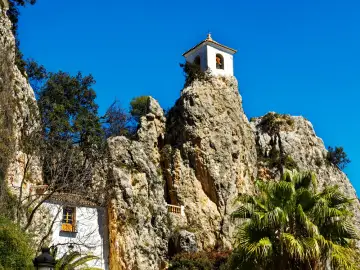 CastleCastillo de San JoséGuadalest — Marina Baixa (Alacant)
11th-century fortress built during Muslim occupation at the highest point of the rocky peak.
-
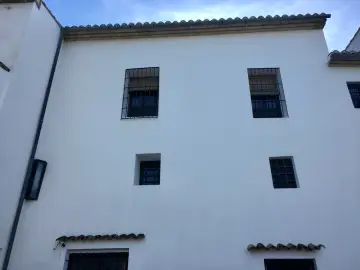 MuseumCasa Orduña (Museo Municipal)Guadalest — Marina Baixa (Alacant)
17th-century manor house built after the 1644 earthquake by the Orduña family, of Basque origin and governors of the castle.
-
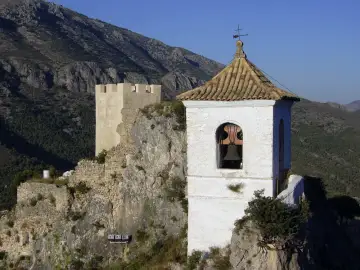 Castle · FREECastillo de la AlcozaibaGuadalest — Marina Baixa (Alacant)
11th-century fortress reinforcing defences alongside the castle of San José, partially hidden atop perilous cliffs.
- 🗿Monument · FREEPortal de San JoséGuadalest — Marina Baixa (Alacant)
Tunnel carved from living rock with a round arch, the only pedestrian entrance to the medieval citadel.
- 🗿Monument · FREEMazmorra (antiguo calabozo)Guadalest — Marina Baixa (Alacant)
12th-century vaulted cell located in the crypt of the town hall. Excavated from solid rock, it remains closed behind a grille where you can…
- 🏔️ViewpointCementerio del CastilloGuadalest — Marina Baixa (Alacant)
Small cemetery set at nearly 600 metres altitude on the upper terrace of the castle of San José, beside its walls.
- 🏛️MuseumMuseo de Saleros y PimenterosGuadalest — Marina Baixa (Alacant)
Collection of over 20,000 salt and pepper shakers from around the world, ordered by material or theme.
- 🏛️MuseumMuseo de Belenes y Casas de Muñecas (Antonio Marco)Guadalest — Marina Baixa (Alacant)
Museum of 70 cm scale dollhouses built from stone, brick and clay tiles. On the ground floor, tiny houses completely furnished.
- 🏛️Museum · FREEMuseo Etnológico de GuadalestGuadalest — Marina Baixa (Alacant)
Typical 18th-century house excavated into rock in the Arab-origin citadel, accessible by tunnel.
- 🏔️Viewpoint · FREEEl Penyó de l'Alcalà (Peña de la Alcalá)Guadalest (Marina Baixa) — Plaça de Sant Gregori
11th-century cylindrical watch tower standing on a rocky pinnacle, whose access is extremely difficult.
Frequently asked questions
Is it free to enter Guadalest?
Walking through the village and its streets is free, but the walled hilltop enclosure — with the castle, the old dungeon and most of the museums — is ticketed, usually through a single combined entry for several sights.
How long do you need to visit Guadalest?
Two to three hours are enough to walk the lower quarter, climb to the walled enclosure and visit two or three museums at an easy pace; add extra time for walking to a nearby viewpoint or down to the reservoir.
Is Guadalest suitable for children?
Yes, though the cobbled streets inside the walled enclosure are narrow and stepped, which makes them awkward with a pushchair; the miniature and dolls'-house museums tend to appeal to younger visitors.