What to see in Tabarca
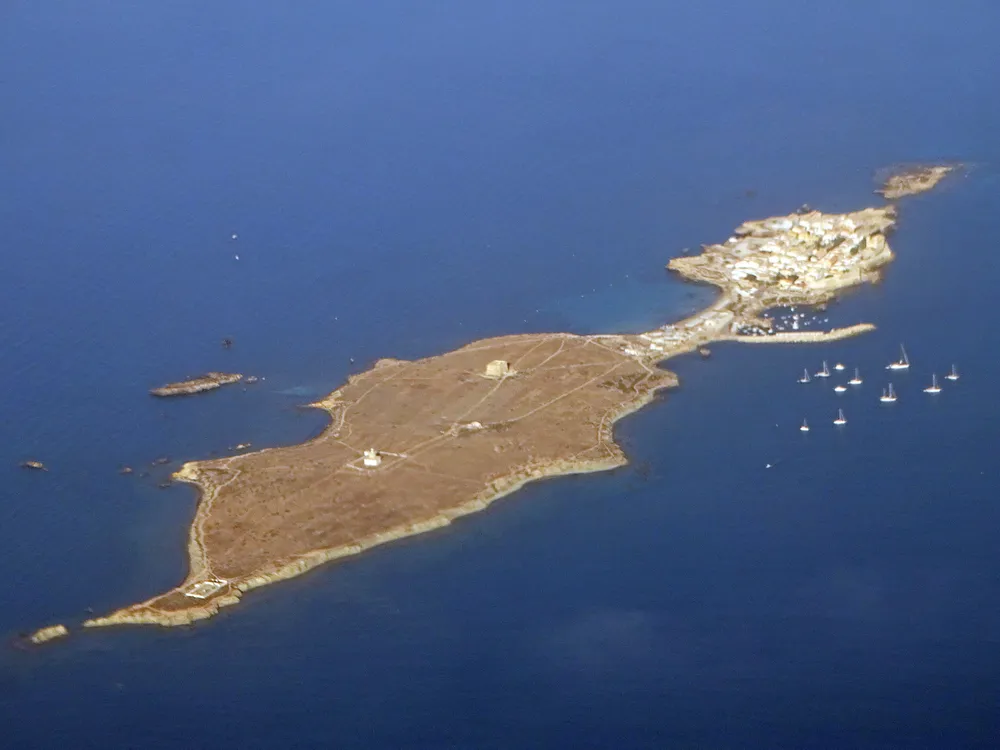
Nueva Tabarca is a small island of barely half a square kilometre off the coast of Alicante, the only island in the Valencian Community with a permanent population: around fifty people today, far below the 242 residents recorded in 1970. Its origin is unusual on the Spanish Mediterranean coast: in 1768, King Carlos III ordered the ransom of 323 Genoese colonists who had spent generations held captive on the Tunisian island of Tabarka, and between 1769 and 1770 he settled them here, on what had until then been an almost empty islet frequented by Barbary pirates.
History
Engineer Fernando Méndez de Ras oversaw the construction of a complete walled enclosure — ramparts, bastions, batteries, gates and warehouses — to protect the new settlers, and in 1770 the church of Sant Pere i Sant Pau was consecrated, with the village growing up around it. The military garrison and governor left the island in 1850, closing the most active chapter of its defensive history; the lighthouse at the island's tip wasn't lit until 1854. For its value as an almost intact urban ensemble, the whole island was declared a Historic-Artistic Site in 1964.
What to see
Walking Tabarca end to end takes a little over an hour: cross the walled village, with its straight 18th-century streets, exit through any of the three baroque gates in the ramparts, and follow the island's perimeter out to the lighthouse. The waters around the island form Spain's first protected marine reserve, declared in 1983 to help species recover and now popular with divers and snorkellers for their visibility and seagrass meadows. The old Governor's House, at the highest point in the village, has been converted into accommodation, one of the few options on the island for anyone wanting to stay beyond a day visit.
The usual way to see Tabarca is on a day boat trip from Alicante or from the port of Santa Pola, the closest, just over four kilometres away. Traces of those original Genoese-Tunisian settlers still show up in some local surnames and in dishes like the local fish caldero stew, though fishing and day tourism now form almost the entire economic base of the island. The island is barely 450 metres wide at its broadest point and rises no more than 15 metres above sea level, low-lying features that made the fortified walls essential to the settlers' protection against storms and raids alike.
🚆 How to get there from Alicante
Tabarca has no road access: the only way in is by boat, with regular sailings from the port of Alicante and, on a shorter crossing, from Santa Pola, the nearest point on the mainland at just over four kilometres away. Tourist boats run the route for most of the year, more frequently in summer, and the crossing from Alicante usually takes around an hour depending on sea conditions. Boats also leave from other points along the coast, such as Benidorm or Torrevieja, mainly in high season. Since there's no vehicle traffic on the island, everything once there is covered on foot.
Compare all towns by transport →
🏖️ Beaches
Frequently asked questions
How do you get to Tabarca?
Only by boat, with regular sailings from Alicante and from Santa Pola, the nearest point on the mainland.
How long does it take to walk the island?
A little over an hour, since Tabarca is only 1,850 metres long and easy to walk end to end.
What makes Tabarca's population origin unusual?
It descends from Genoese colonists freed from captivity on the Tunisian island of Tabarka, settled here by order of Carlos III between 1769 and 1770.