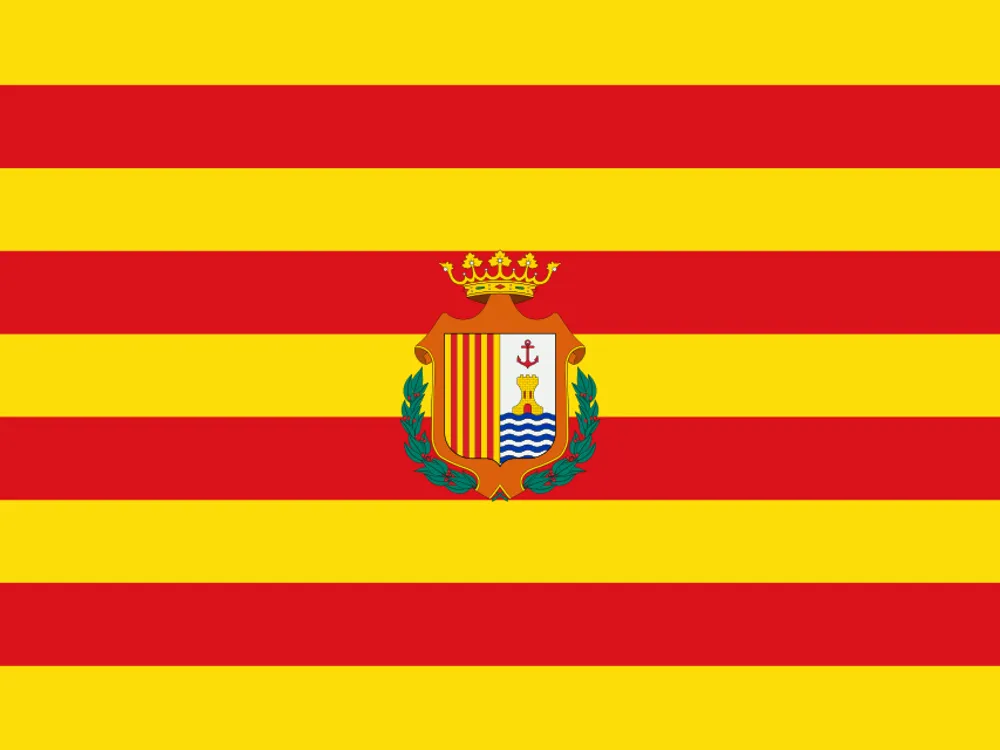
What to see in Santa Pola
Santa Pola has lived off the sea since Roman times, when today's harbour operated as Portus Ilicitanus, the outlet to the sea for nearby Ilici. The first documented mention of the medieval settlement dates from 1275, under the name Cap de l'Aljub port, and the Castillo-Fortaleza that still presides over the town centre was built from 1557 on the orders of the Duke Bernardino de Cárdenas to defend the coast against Barbary raids; it was from this same port, in 1609, that much of the local Morisco population embarked when expelled toward North Africa. Several theories explain the town's name, from a derivation of "Santa Paula" to a legend placing the landing of the Apostle Paul on the neighbouring island of Tabarca.
Salt flats and fishing
The Salinas Nature Reserve, covering close to 2,470 hectares, combines salt extraction that has continued since the late 19th century with a protected habitat important for birds such as flamingos and black-winged stilts. The fishing port, operating at its current site since 1911, still runs one of the leading fish auctions on the Alicante coast, though today's catches fall well short of the levels recorded in the 1970s, when the fleet numbered more than fifteen hundred sailors working as far as the Canary Islands. The Museo del Mar preserves that fishing and salt-making history, with models of traditional boats and an explanation of the stages of salt production, from flooding the ponds to raking the finished crystals.
Gateway to Tabarca
Santa Pola is also the shortest departure point for Tabarca island, barely nine kilometres off the coast; boats to the only inhabited islet in the Comunitat Valenciana leave from the fishing harbour for much of the year, which makes Santa Pola the usual base for anyone visiting Tabarca without staying overnight there. From the Atalayola lighthouse, on the cape of the same name, much of this stretch of coast comes into view.
With close to 39,700 registered residents and tourist capacity of around 100,000 beds across hotels and apartments, Santa Pola's population multiplies in summer, and the town holds several sea-related festivals through the year, including the Virgen del Carmen procession every 16 July. The municipality is split between a sierra to the north, a central plain, and a marshland zone to the south next to the salt flats, giving it a notable range of landscapes within a fairly small area.
🚆 How to get there from Alicante
Santa Pola lies around 20 kilometres south of Alicante, a short trip that can be covered by car, bus or even bicycle along a dedicated cycle path in good weather. The N-338 road connects the two towns directly in about 20 to 25 minutes outside rush hour. Direct, frequent buses run between Alicante's bus station and Santa Pola, taking around 40 minutes, a comfortable option for anyone who would rather not drive. There is no TRAM or train station in the municipality, so the bus is the main public transport option. Taxis and ride-hailing apps are also a straightforward option for the short hop between the two towns.
Compare all towns by transport →
-
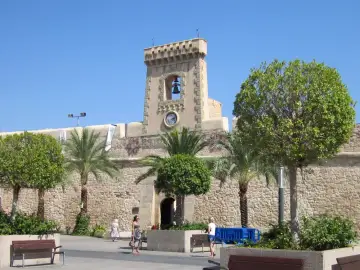 CastleCastillo-Fortaleza de Santa PolaSanta Pola — Baix Vinalopó (Alacant)
Sixteenth-century Renaissance fortress built to defend against pirate attacks.
- 🌳Garden · FREEReserva Natural Salinas de Santa PolaSanta Pola — Baix Vinalopó (Alacant)
Wetland of 2,500 hectares recognised as a Ramsar site and important bird location.
- 🏔️Viewpoint · FREETorre AtalayolaSanta Pola — Baix Vinalopó (Alacant)
Sixteenth-century defensive tower with integrated lighthouse, part of the historical coastal surveillance system.
-
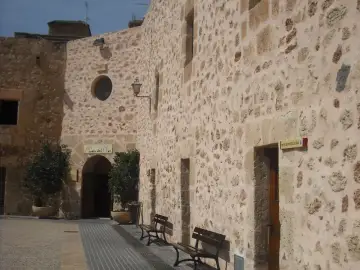 MuseumMuseo del Mar de Santa PolaSanta Pola — Baix Vinalopó (Alacant)
Museum located in the Renaissance fortress dedicated to the region's maritime history.
Frequently asked questions
How long does it take to get from Alicante to Santa Pola?
About 20 to 25 minutes by car on the N-338, or around 40 minutes on a direct bus from Alicante's bus station.
Where do the boats to Tabarca leave from?
Most sailings to Tabarca island leave from Santa Pola's fishing harbour, the shortest crossing on the coast; there are also departures from Alicante itself.
Is the Salinas Nature Reserve free to visit?
Yes, the trails and viewpoints around the salt flats are open and free to access; it's a good spot for watching flamingos, especially in the morning.