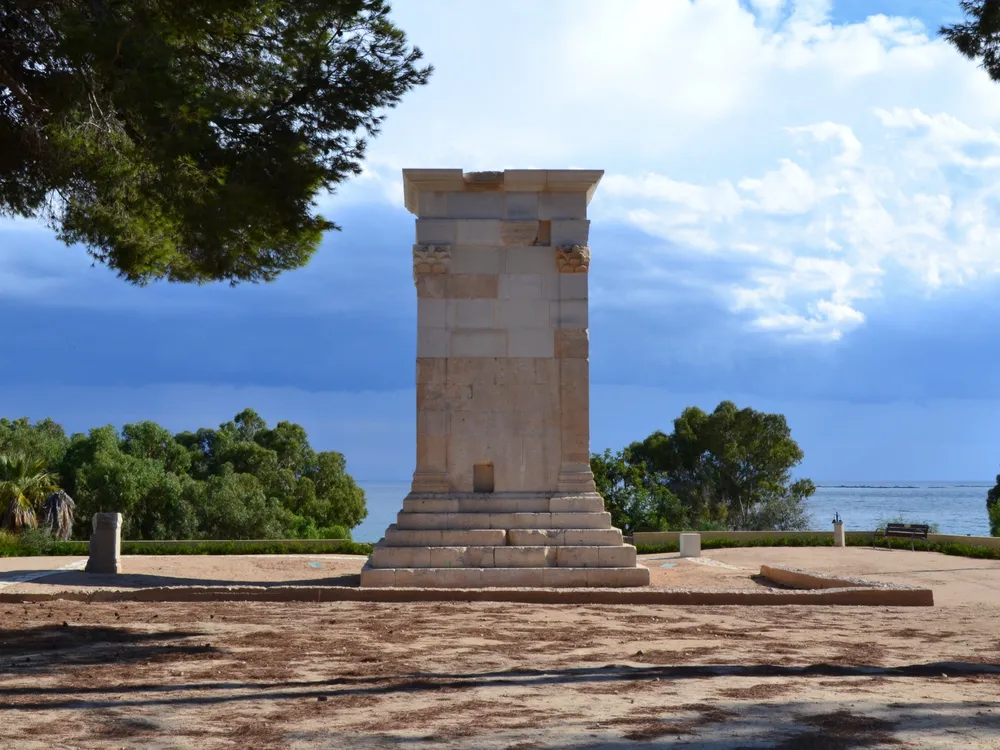
Torre de Sant Josep
Roman funerary monument built between 150 and 170 AD to honour Lucius Terentius Marcinus. Originally five metres on each side, it stands out for its position facing the sea to be visible from ships. Restored and surrounded by funerary garden.
The Torre de Sant Josep stands on the Mediterranean shore about three kilometres northeast of Villajoyosa. It is a Roman funerary monument built between 150 and 170 AD in honour of Lucius Terentius Mancinus, a leading figure of the Roman municipium of Allon, as confirmed by an inscription found on the site.
A mausoleum built to be seen from the sea
Unlike most Roman funerary monuments, which were placed beside roads for travellers on land, the Torre de Sant Josep faces the Mediterranean: it was meant to be recognised by sailors approaching the coast. It originally took the form of a tower with pilasters and Corinthian capitals at the corners, likely topped by a small pyramid, and stood inside one of the largest funerary precincts known in Europe.
The original inscription also named the Roman tribe Mancinus belonged to, a detail that has not survived, though the rest of the text that identified him has.
The monument suffered some unfortunate interventions during the 20th century; in 2007 a modern-era upper structure was removed, and since 2011 the regional heritage authority has carried out a restoration that has brought it back to nearly ten metres in height and recovered the funerary garden around it. Guided visits and historical re-enactments have taken place on site since 2012.
It can be viewed outdoors, free of charge, at any time of year, one more option among the province’s free things to do. It pairs well with a walk through Villajoyosa’s old town and the Iglesia de la Asunción, both close by, or with the coastal site of Illeta dels Banyets, of a similar period, a little further south.
Frequently asked questions
Is the Torre de Sant Josep free to visit?
Yes, it can be seen from outside free of charge at any time, since it stands in the open on the coast.
Why does it face the sea instead of a road?
It was built so sailors could recognise it from their boats, unlike most Roman funerary monuments, which stood beside land routes.
Who is the tower dedicated to?
Lucius Terentius Mancinus, a prominent figure of the Roman municipium of Allon, according to the inscription found at the site.
Comments
Sign in with Google to comment and rate
Be the first to comment.