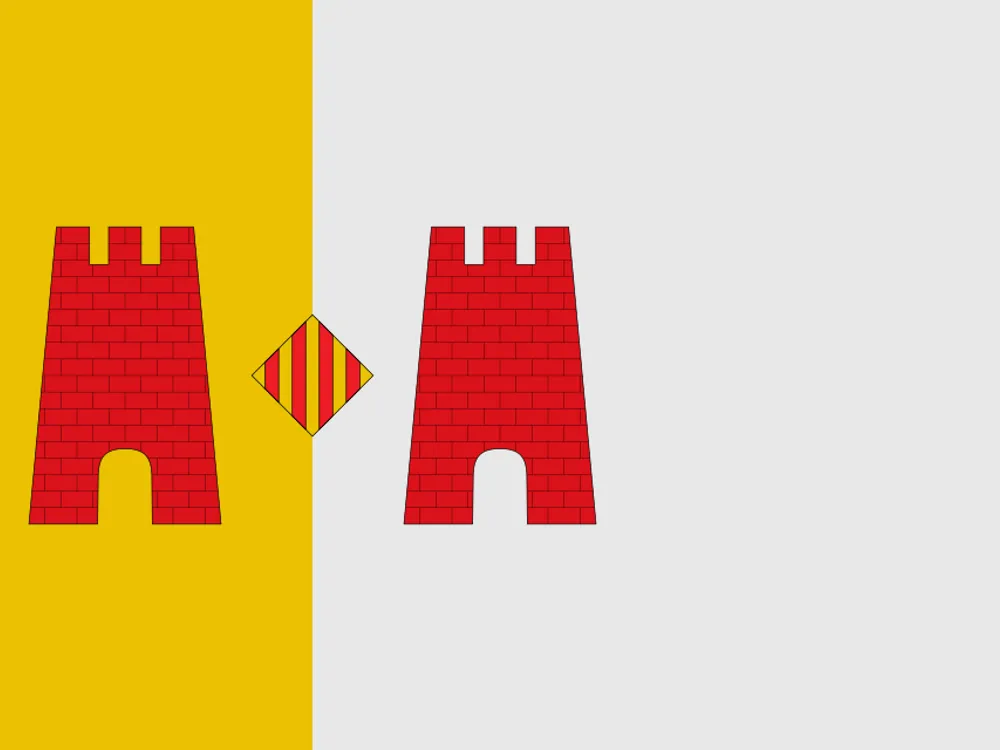
What to see in Ibi
Ibi sits in an inland valley of Alicante province, between Alcoy and Jijona, at an elevation of more than 800 metres. For much of the twentieth century it held Spain's largest concentration of toy factories, with more than seventy running at the industry's peak. That history now sits alongside a second trade, ice cream making, which took over as the main economic activity once the toy sector went into decline.
From tin toys to artisan ice cream
Ibi's toy industry began in a family tinware workshop: in 1905, Rafael Payá Picó handed the business to his three sons, Vicente, Pascual and Emilio, who turned it into Payá Hermanos, the town's first company built entirely around manufacturing metal toys. Its miniature cars, toy kitchens and table-football sets drew in more workshops, and by the mid-twentieth century Ibi formed part of what is now called the Valle del Juguete (Toy Valley) together with Onil, Castalla, Tibi and Biar, with toys accounting for close to 80% of local industrial activity. The 1970s oil crisis pushed up the price of plastic, and the later arrival of toys made in China closed much of what remained: Payá and Rico, the two biggest factories, shut down in 1984. The Museo Valenciano del Juguete, housed in the former Payá building, keeps several hundred pieces from that century of production. The town's other tradition, ice cream making, is older and still active: in the mid-nineteenth century, several Ibi residents working in Madrid learned the craft from an Italian ice cream maker and combined it with snow packed into hillside ice wells; in 1892 Carlos Bornay founded La Ibense Bornay here, Spain's oldest ice cream company, and generations of ice cream makers went out every summer to sell ice cream, horchata and lemon water across the rest of the country, an itinerant trade recalled by the Fuente del Gelador, a granite monument carved in 1991.
What to see in Ibi today
Plaza de los Reyes Magos holds the monument to the Three Wise Men that gives it its name: a white marble sculpture weighing over five tonnes, inaugurated on 5 January 1975 and made by the Granada-born sculptor Aurelio López Azaustre. Close by stands the Iglesia de la Transfiguración del Señor, a late-eighteenth-century neoclassical church topped with a dome of blue glazed tiles. On the edge of town, on the way up into the sierra, the Torretes botanical garden and biological station holds botanical collections and a medieval garden of medicinal plants, run jointly with the University of Alicante. Anyone planning a day trip from Alicante finds two trades, toys and ice cream, condensed into one walkable route through the centre.
🚆 How to get there from Alicante
Ibi lies inland, a little over 40 kilometres from the city of Alicante and about half an hour from Alcoy. The town has no train station, so getting there from the capital means choosing between driving and taking an intercity bus.
- By car, the A-7 motorway runs toward Jijona and Alcoy, followed by a connecting road into Ibi; the drive takes a little over half an hour from the city of Alicante.
- By bus, direct services run from Alicante's bus station to Ibi, with a journey of around an hour and a quarter.
- Travellers already in the interior can combine the visit with Jijona or Alcoy, both close by road.
Compare all towns by transport →
-
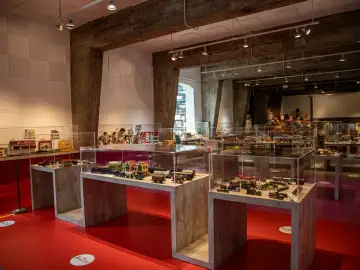 MuseumMuseo Valenciano del JugueteIbi — L'Alcoià (Alacant)
Museum dedicated to toy history since 1903, housed in the former Payá factory.
- 🌳Garden · FREEJardín Botánico y Estación Biológica TorretesIbi — L'Alcoià (Alacant)
Botanical garden of 53 hectares in the Font Roja Natural Park with collections of medicinal, aromatic, and endemic rare plants.
-
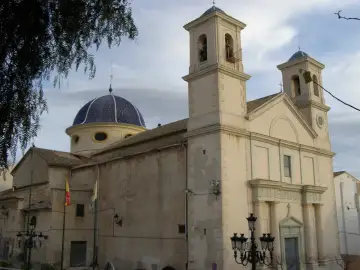 Church · FREEIglesia de la Transfiguración del SeñorIbi — L'Alcoià (Alacant)
Ibi's oldest monument from the 12th century, with successive constructions and reconstructions.
- 🗿Monument · FREEFuente del GeladorIbi — L'Alcoià (Alacant)
Granite sculpture dedicated to Ibi's artisanal ice-cream-making tradition that defines its identity as the Cradle of Ice-Cream.
Frequently asked questions
What is Ibi known for?
Ibi was Spain's main toy-manufacturing centre for decades, with more than seventy factories running at its peak. When that industry declined, artisan ice cream making, which has roots going back to the nineteenth century, became the town's leading economic activity.
Can Ibi be visited as a day trip from Alicante?
Yes. Ibi is a little over 40 kilometres from the city of Alicante, around half an hour by car or a bit over an hour by direct bus, which is enough time to see the old centre and the toy museum in a single day.
Is Ibi a good destination with children?
Yes, the Museo Valenciano del Juguete and the Three Kings monument in the square of the same name are the two sights that tend to interest children most, and both sit close together in the town centre.