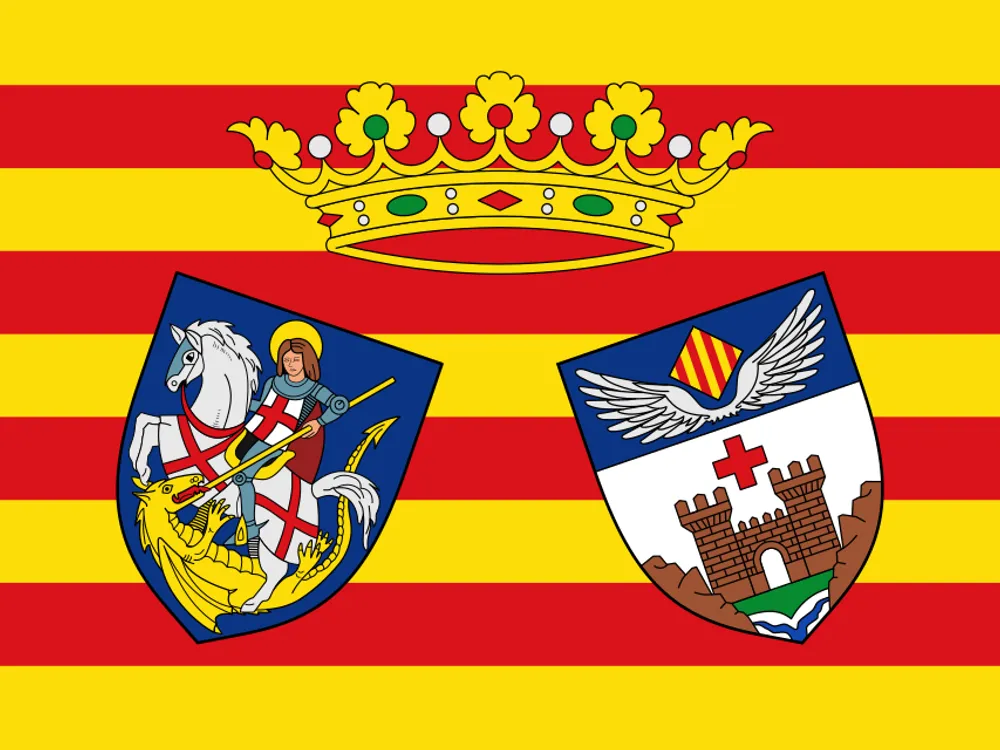
What to see in Alcoi
Alcoy sits on a promontory carved by three ravines — the Molinar, the Riquer and the Barxell — in the mountainous interior of Alicante province, 561 metres above sea level and flanked by the Mariola and Carrascal ranges. That broken terrain, which forced the town to bridge its own neighbourhoods together, earned it the nickname 'city of bridges' and produced a tightly packed layout unlike anything on the province's coast. With around 61,000 residents, it remains the financial, commercial and cultural hub for the surrounding towns.
The industrial cradle
Alcoy was the main industrial centre of inland Alicante: wool working was already established by the 16th century, and between the 18th and 19th centuries it added a powerful paper industry — including its well-known cigarette-paper mills — and metalworking, becoming the district's largest manufacturing hub by around 1830. Its Royal Cloth Factory also opened Spain's first textile school, the Escuela de Bolla, recognised as an industrial school in 1853. Buildings from that era still stand, among them the Casa de la Cultura, a former Bank of Spain branch built in 1927, and the Puente de Sant Jordi, a 245-metre exposed-concrete, Art Deco viaduct whose construction began in 1925 and which carries traffic 45 metres above the Riquer ravine. The Museo Arqueológico Camilo Visedo Moltó, housed in a Renaissance palace that once served as the town's seat of government and was declared a national monument in 1962, holds Neolithic pottery and the lead tablets with Iberian script found at nearby sites.
Mountains and festival
Two protected natural areas flank the town: the Parque Natural del Carrascal de la Font Roja, home to well-preserved Mediterranean woodland and marked trails toward the Menejador summit, and the Parque Natural de la Sierra de Mariola, a range of more than 17,000 hectares declared a natural park in 2002 and shared with six neighbouring municipalities. Every April, that mountain setting becomes the stage for the Moros y Cristianos de Sant Jordi festival, with 28 filaes parading in honour of the patron saint, a tradition documented since the 17th century and declared a Festival of International Tourist Interest in 1980. The 28 filaes split evenly between the Moorish and Christian sides, each parading in its own costumes through the streets of the historic centre. The legend behind it dates to 1276, when an attack on the town by the Mudéjar leader Al-Azraq was, according to tradition, repelled with the help of Sant Jordi.
🚆 How to get there from Alicante
Alcoy is around 60 kilometres north of Alicante, deep in the province's interior. By car, the A-7 motorway — passing near Castalla and Ibi — takes roughly three-quarters of an hour, climbing through a stretch of bends on the final approach into the city. The town does have a railway station, but its line runs toward Xàtiva rather than the provincial capital, so the train isn't a practical option from Alicante.
- By car, on the A-7 motorway via Castalla and Ibi.
- By intercity bus, with several daily departures from Alicante's bus station.
- By taxi or rental car, for travellers who'd rather not work around bus timetables.
Compare all towns by transport →
-
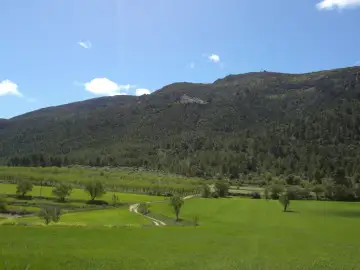 Garden · FREEFont Roja Natural ParkAlcoi — L'Alcoià (Alacant)
Protected reserve covering 2,298 hectares, featuring a Mediterranean forest of oaks, pines and rare species near Alcoy and Ibi.
-
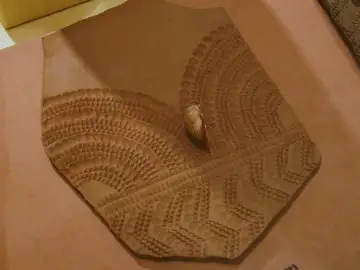 MuseumMuseo Arqueológico Camilo Visedo MoltóAlcoi — L'Alcoià (Alacant)
Located in a 16th-century Renaissance building, the museum houses collections ranging from Neolithic ceramics to Arabic lead inscriptions…
-
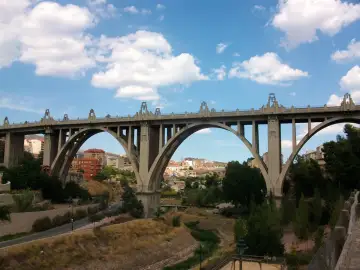 Monument · FREEPuente de Sant JordiAlcoi — L'Alcoià (Alacant)
Art deco bridge completed in 1931, 245 metres long and 45 metres high, built in innovative reinforced concrete.
-
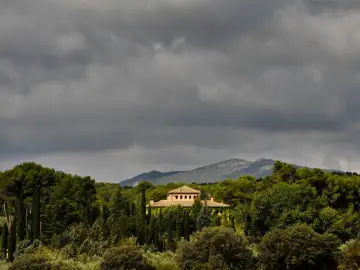 Garden · FREESierra de Mariola Natural ParkAlcoi — L'Alcoià (Alacant)
Declared in 2002, the 17,000‑hectare reserve spans eight municipalities, including Alcoy.
- 🍸Cool venueCasa de la CulturaAlcoi — L'Alcoià (Alacant)
Cultural centre in the former Bank of Spain building of 1927, a neoclassical structure.
-
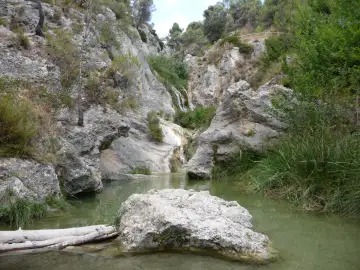 Beach & nature · FREERacó de Sant Bonaventura - Els CanalonsAlcoi — Paratge Natural Municipal (Alacant)
An 18.34-hectare Municipal Natural Site since 2002 in Alcoi, where the Polop river carves Els Canalons pools.
Frequently asked questions
Is the Font Roja Natural Park free to visit?
Yes, walking access to the park costs nothing. Private vehicle access can be restricted at certain times of year, so it's worth checking before you go.
How long do you need to visit Alcoy?
A full day allows an unhurried look at the historic centre, the Puente de Sant Jordi and the archaeological museum. Add at least half a day more for a walk in the Font Roja or Sierra de Mariola parks.
When is the best time to visit Alcoy?
Spring, especially around 23 April, brings the Moros y Cristianos festival and the town's liveliest atmosphere. For walking in the surrounding natural parks without the heat, spring and autumn are the most comfortable seasons.