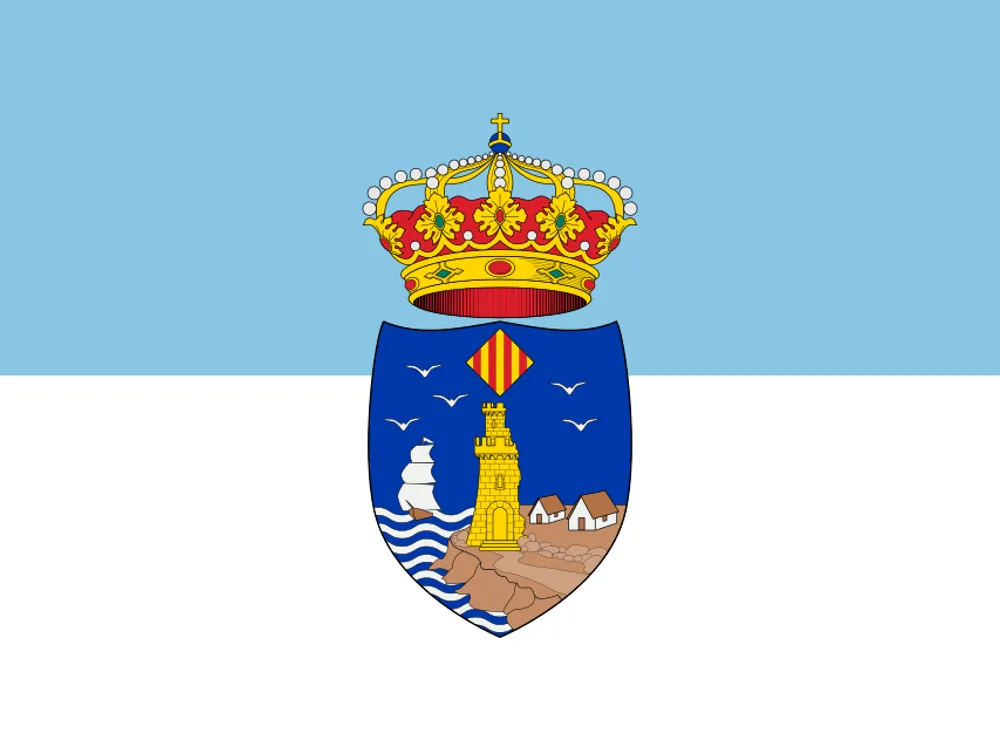
What to see in Torrevieja
Torrevieja grew up around salt extraction, an activity documented since before the 13th century that still shapes the town's landscape and economy. The modern settlement dates from 1803, when Carlos IV ordered the Royal Salt Works administration moved to the site of the old watchtower, Torre Vieja, that gives the city its name. An earthquake in 1829 destroyed the existing town completely; it was rebuilt afterward on the grid layout that much of today's centre still follows, and the city received its city charter in 1931, granted by Alfonso XIII. The modernist Casino de Torrevieja, built in 1896, is another landmark that still defines the historic centre.
The salt flats and the natural pools
The La Mata and Torrevieja lagoons, protected as a natural park, owe their pink colour to microorganisms that thrive in the concentrated brine. Salt extraction continues today, with annual production of around 600,000 tonnes, much of it exported; the old Eras de la Sal, in use between 1777 and 1958, survive as a piece of industrial architecture, and the Museo del Mar y de la Sal explains that process. The lagoons also draw birdwatchers, since flamingos and other wading birds feed in the shallow, mineral-rich water. Along the Juan Aparicio seafront promenade, stone breakwaters built to calm the waves create the so-called natural pools, a sheltered bathing area between Playa del Cura and La Marina, quite different from an open beach.
The seafront and the festival
The Dique de Levante, which shelters the marina, has become a popular walking route with views over the bay, and to the south the municipality still has quieter coves such as Cala Ferris and the defensive Torre de la Mata, built facing the sea as part of the historic coastal watch system. Every July since 1955, the Certamen Internacional de Habaneras y Polifonía has filled the city's auditorium with choirs from different countries, honouring the seafaring past that carried these songs from Cuba to the Alicante coast. The competition has grown into one of the most established choral music events on the Mediterranean coast.
The municipality's population, just over 98,000 registered residents, has grown steadily since the 1980s, when it had barely 13,000 residents, thanks to residential tourism, and Torrevieja is today the third most populous municipality in the province. Mild weather through the winter months is one reason for that growth, drawing residents from other European countries who spend part or all of the year on the coast.
🚆 How to get there from Alicante
Torrevieja lies a little over 50 kilometres south of Alicante, along the coast toward the Vega Baja district. The most direct route by car is the AP-7 motorway or the N-332 road, taking around 45 minutes to an hour depending on traffic. There is no TRAM or train line to Torrevieja; public transport runs on regular bus services that leave frequently from Alicante's bus station and take somewhat longer than driving. Alicante-Elche airport, closer than Alicante itself, is also a common starting point for travellers arriving by air who rent a car or take a direct bus down the coast.
Compare all towns by transport →
- 🌊Water parkAquópolis TorreviejaTorrevieja — Vega Baja del Segura (Alacant)
Water park of 90,000 square meters with 15 attractions, from high-speed slides to a wave lagoon.
- ⛪Church · FREEParroquia Arciprestal de la Inmaculada ConcepciónPlaza de la Constitución / Calle Caballero de Rodas 29, centro de Torrevieja
Neoclassical church, the oldest in Torrevieja, completed in 1880.
- ⛪Church · FREEParroquia del Sagrado Corazón de JesúsPlaza de Oriente, barrio de La Punta, Torrevieja
Modern single-nave church located in Plaza de Oriente, rebuilt after 2007.
- ⛪Church · FREEIglesia de Nuestra Señora del Rosario (La Mata)Núcleo histórico de La Mata, a unos 5 km del centro de Torrevieja
Church of 1772 located in Plaza Doña Encarnación Puchol in La Mata, five kilometres north of the centre.
- ⛪Church · FREEParroquia de San Roque y Santa AnaBarrio de San Roque, Torrevieja
Parish of the San Roque neighbourhood, beside Torrevieja's port. It is the reference temple of a maritime neighbourhood built around salt…
-
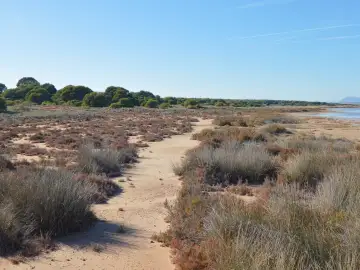 Beach & nature · FREEParque Natural de las Lagunas de La Mata y Torrevieja (Laguna Rosa)Torrevieja — Vega Baja del Segura (Alacant)
Protected wetland of 3,700 hectares spread across four municipalities.
-
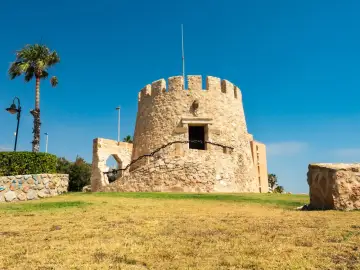 Castle · FREETorre del Moro (Torre del Cabo Cervera)Torrevieja — Vega Baja del Segura (Alacant)
Ten-metre coastal watch tower built in the 16th century on the hill of Cabo Cervera.
-
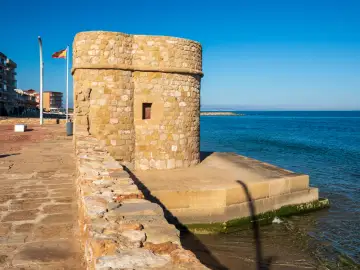 Castle · FREETorre de La MataTorrevieja — Vega Baja del Segura (Alacant)
Coastal watch tower 5.5 metres high, rebuilt in the 16th century by engineer Juan Bautista Antonelli.
-
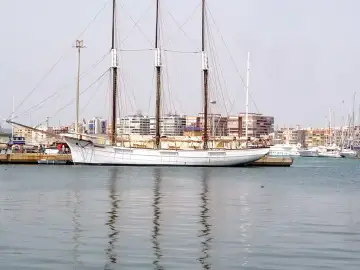 Museum · FREEMuseo del Mar y de la SalTorrevieja — Vega Baja del Segura (Alacant)
Ethnological museum opened in 1995 and dedicated to Torrevieja's maritime and salt heritage.
-
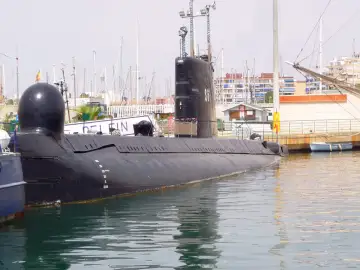 MuseumMuseos Flotantes: Submarino S-61 Delfín y Patrullero Albatros IIITorrevieja — Vega Baja del Segura (Alacant)
The 58-metre submarine S-61 Delfín operated 30 years in the Spanish Navy with 2,500 dives completed.
-
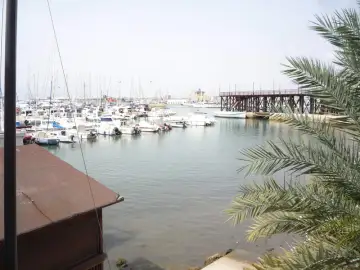 Monument · FREEEras de la SalTorrevieja — Vega Baja del Segura (Alacant)
Salt-loading complex built in 1777 with drying beds, wharves and jetties to transport salt from the saltworks.
-
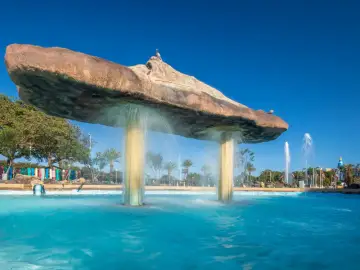 Garden · FREEParque de las NacionesTorrevieja — Vega Baja del Segura (Alacant)
Urban park of 38,000 square metres opened in 2004 with a central lake whose shoreline traces the map of Europe.
- 🌿Beach & nature · FREEParaje Natural Municipal Molino del AguaTorrevieja — Vega Baja del Segura (Alacant)
Protected area of 17 hectares facing the beach of La Mata, declared in 2006. System of embryonic, mobile, fossil and fixed dunes.
-
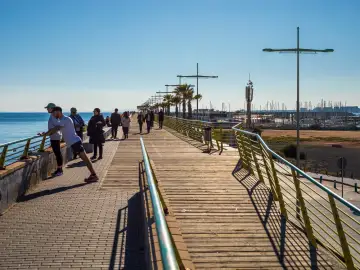 Viewpoint · FREEDique de LevanteTorrevieja — Vega Baja del Segura (Alacant)
1,600-metre wooden and metal promenade over the water opened in 2000.
- 🌿Beach & nature · FREECala FerrisTorrevieja — Vega Baja del Segura (Alacant)
Cove about 200 metres wide between dunes and low vegetation, with golden sand and rocky stretches. It has no facilities.
🏖️ Beaches
- 🌿Beach & nature · FREEPlaya del Cura (Torrevieja)Torrevieja
Torrevieja's central beach, right by the marina and the shopping promenade: small, golden sand and unusually calm water thanks to a rocky…
- 🌿Beach & nature · FREEPlaya de los Locos (Torrevieja)Torrevieja
North of Torrevieja's centre, sportier and a touch less packed than Playa del Cura: fine white sand, slightly livelier waves that suit…
Frequently asked questions
Is there a direct train from Alicante to Torrevieja?
No, the town has no train or TRAM station; the usual way to get there without a car is by regular bus from Alicante's bus station.
What are Torrevieja's natural pools?
They are bathing areas sheltered by stone breakwaters along the Juan Aparicio promenade, designed to offer calm water without the waves of an open beach.
Can you visit the lagoons natural park?
Yes, it's freely accessible, with trails and viewpoints set up for watching the pink lagoon and the wildlife that lives there, especially birds.