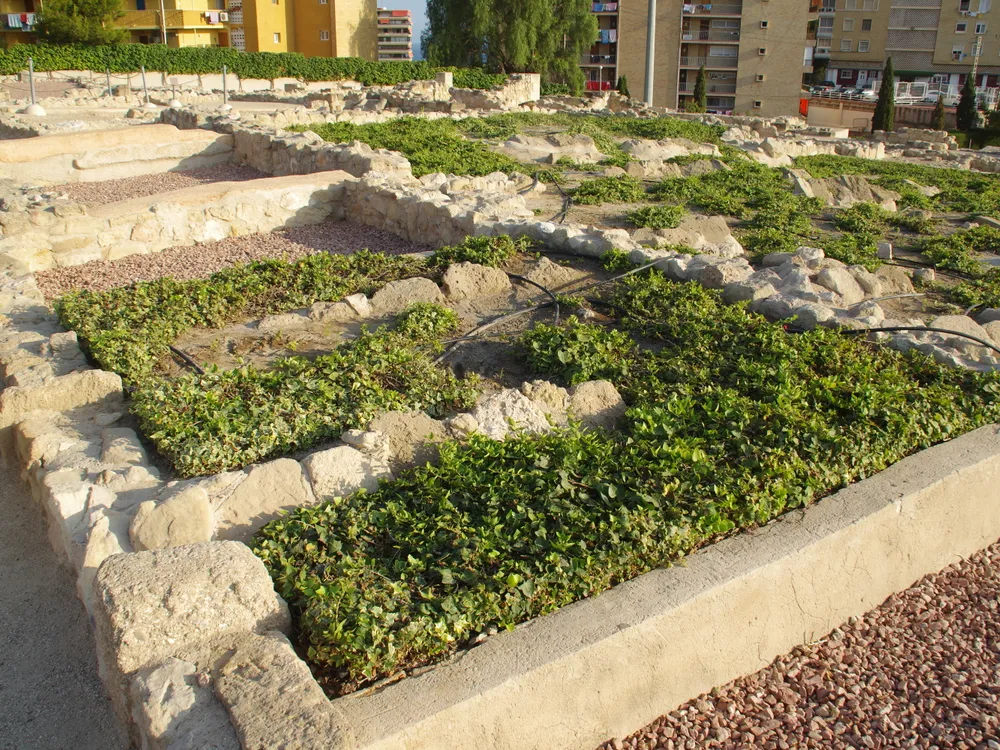
Lucentum (Tossal de Manises)
Roman city on a 38-metre hill with origins dating to the 5th–4th century BC, reaching its peak under Augustus when it achieved municipium status. The 25,000 m² site is enclosed by walls with a 600-metre perimeter.
From Iberian settlement to Roman city
The Tossal de Manises is the 38-metre hill where Lucentum once stood, the Roman city whose name evolved into "Alicante." The site began as a settlement of the Iberian Contestani people between the 5th and 4th centuries BC, built on raised ground by the sea in what is now the Albufereta district. Under Roman rule the settlement grew into a city on a regular street plan and reached its peak under Emperor Augustus, when it was granted the status of municipium, giving its residents full Roman citizenship rights.
The site preserves almost its entire ancient street plan: roughly 25,000 square metres enclosed by a wall about 600 metres long, with visible remains of streets, houses, cisterns and public buildings along a marked walking route. The first excavation campaigns date back to the 1930s, and the site has since been declared a Historic-Artistic Monument. Everything recovered from the digs — pottery, coins, architectural fragments — is kept and displayed at the MARQ, whose Roman gallery reconstructs much of daily life in the city.
What to see
A signposted route crosses the hilltop between walls and foundations that still trace out the old streets and baths. Because it's an open-air, largely uncovered site, comfortable shoes help and it's worth avoiding the hottest hours in summer, since there is little natural shade. From the top, the bay of Alicante spreads out clearly, and to the south the outline of Castillo de Santa Bárbara is visible — the fortress that eventually took over as the city's defensive stronghold once Lucentum declined. The coastline around the tossal, in the Albufereta area, connects on foot to coves such as Cala Cantalar, part of the same stretch of coast Lucentum once controlled. The site is easiest to take in as part of a wider visit to Alicante, pairing the ruins with the museum that holds everything found there.
Frequently asked questions
Is Lucentum free to visit?
No, entry is ticketed. It's worth checking whether a combined ticket with the MARQ archaeological museum is available, since the museum holds everything excavated at the site.
How long does a visit take?
A relaxed walk around the hilltop, reading the information panels, takes roughly 45 minutes to an hour. It's a compact site, easy to combine with another stop the same day.
Is it suitable for children?
Yes, the route is outdoors and easy to walk, though there's little shade and no play areas, so it helps to bring water and sun protection, especially in the hotter months.
Comments
Sign in with Google to comment and rate
Be the first to comment.