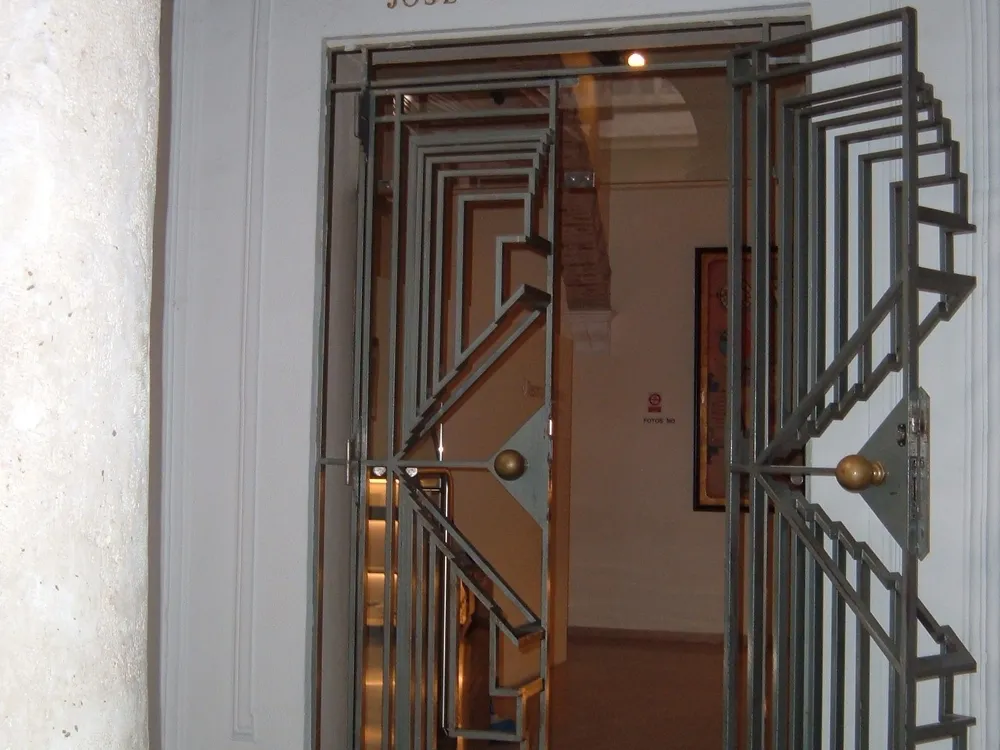
Museo Arqueológico José María Soler
Holds Iberian and Roman objects, with emphasis on the Villena Treasure: pieces of gold, silver, iron, and amber of incalculable value. One of Europe's most important archaeological finds.
For more than sixty years, the Museo Arqueológico José María Soler displayed material excavated over the career of the archaeologist it was named after, inside the Renaissance-era municipal palace of Villena. It closed in 2019 so its collections could move into the new Museo de Villena (MUVI), which opened in 2026 in the former Electro Harinera Villenense building, an early 20th-century factory refitted for museum use.
The Tesoro de Villena
In October 1963, building work in the centre of town turned up a gold bracelet weighing almost half a kilo. Soler, as local commissioner for archaeological excavations, decided to dig at the piece’s place of origin, at the Rambla del Panadero in the Sierra del Morrón, and on 1 December that year located the rest of the hoard, hidden inside a ceramic vessel. The Tesoro de Villena holds close to ten kilos of gold across eleven bowls, twenty-eight bracelets, three bottles and other smaller pieces, plus three silver bottles and an iron bracelet; it was buried around three thousand years ago and ranks among the most important prehistoric gold hoards found in Europe. In August 2026, most of the gold pieces were stolen from the museum in an overnight raid; the original hoard remains the subject of a police investigation.
A larger museum
The new building merges the archaeological collection with that of the former Museo Etnográfico Jerónimo Ferriz, holding more than five thousand pieces on rural life in Villena during the 19th and 20th centuries. The archaeological route has also grown to include Palaeolithic and Neolithic material, Iberian pieces such as the Dama de Caudete and the Arracada de la Condomina, and Roman and medieval finds from the district, alongside objects from Cabezo Redondo, the Bronze Age settlement that fills out Villena’s story before the arrival of the Iberians and Romans.
A visit takes a little over an hour and makes a good option for a rainy day, among the province’s best museums. It combines well with the Castillo de la Atalaya and the Museo Festero, both a short walk away.
Frequently asked questions
Is the Villena Archaeological Museum free?
No, there is an admission charge.
Can you see the original Tesoro de Villena?
Not in full: in August 2026 most of the gold pieces were stolen from the museum. Several silver pieces weren't taken and remain on display; the rest of the MUVI's collection stays open to the public.
Is it still called the José María Soler Museum?
The historic name is still tied to the collection, though since 2026 it has been displayed at the new Museo de Villena (MUVI), which merges the city's former archaeological and ethnographic museums.
Comments
Sign in with Google to comment and rate
Be the first to comment.