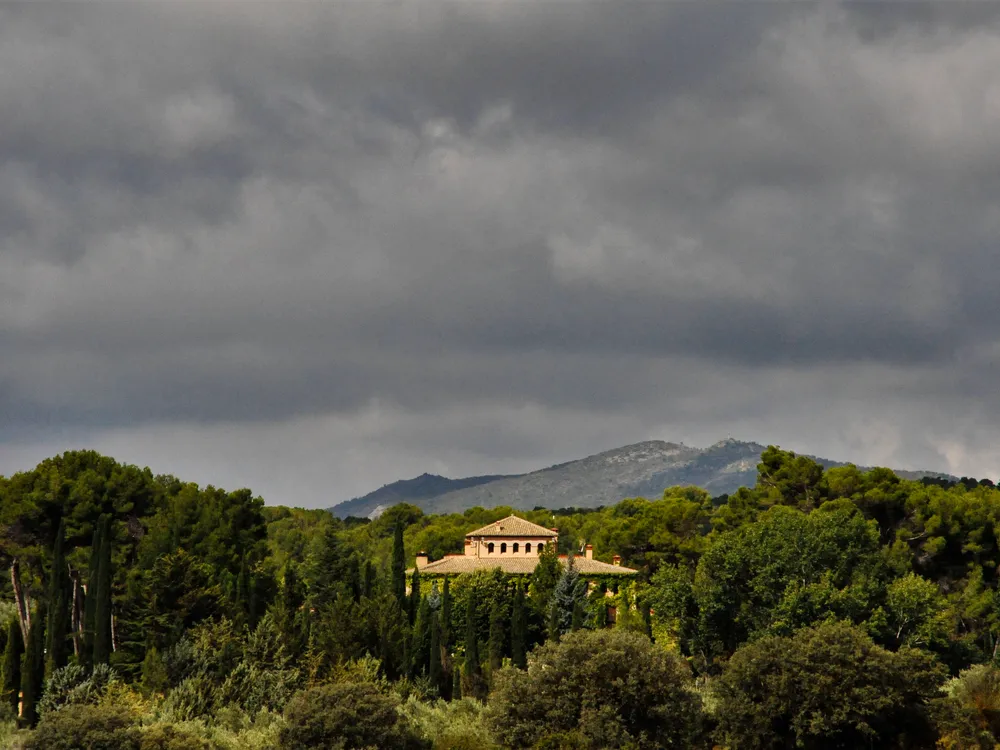
Sierra de Mariola Natural Park
Declared in 2002, the 17,000‑hectare reserve spans eight municipalities, including Alcoy. Four colour‑coded trails lead visitors through ice caves, rivers, archaeological sites and viewpoints; the 1,390‑metre Montcabrer peak offers sweeping views of the countryside. Pine and oak forests shelter a diverse array of aromatic plants.
The Serra de Mariola Natural Park protects almost 17,000 hectares of mountain terrain spread across eight municipalities, including Alcoy, and was declared a protected area in 2002. Its forests of pine, oak, maple and ash are threaded with numerous springs and streams, in terrain that supports many of the region's best-known medicinal and aromatic plants.
Springs, ice houses and marked trails
The park is crowned by Montcabrer, at 1,390 metres, with views reaching across much of the surrounding district. The sierra also preserves a good number of «neveras» or ice houses, traditional structures once used to store pressed snow and sell it as ice to coastal towns over the summer; the Cava Gran, built between the 17th and 18th centuries, is the best known and can still be visited. Several waymarked, colour-coded trails of varying length and difficulty loop around it, taking in springs, rivers, archaeological sites and viewpoints across the massif.
The combination of altitude, orientation and limestone soil has made Mariola one of the most botanically diverse areas of inland Alicante, with a herbalist tradition that's still alive in the surrounding villages.
The sierra can be explored from Alcoy, which also concentrates much of the district's urban heritage, including the Puente de Sant Jordi and the Museo Arqueológico Camilo Visedo Moltó. For another natural area nearby, the Font Roja Natural Park lies on the other side of the city.
Frequently asked questions
Is the park free to visit?
Yes, access to the Sierra de Mariola is free.
What are the «neveras» or ice houses?
Traditional structures used to store pressed snow and sell it as ice in summer; the Cava Gran is the park's best-known example.
What's the best time to go?
Spring, for the aromatic plants in bloom, and autumn, when temperatures are milder for walking.
Comments
Sign in with Google to comment and rate
Be the first to comment.