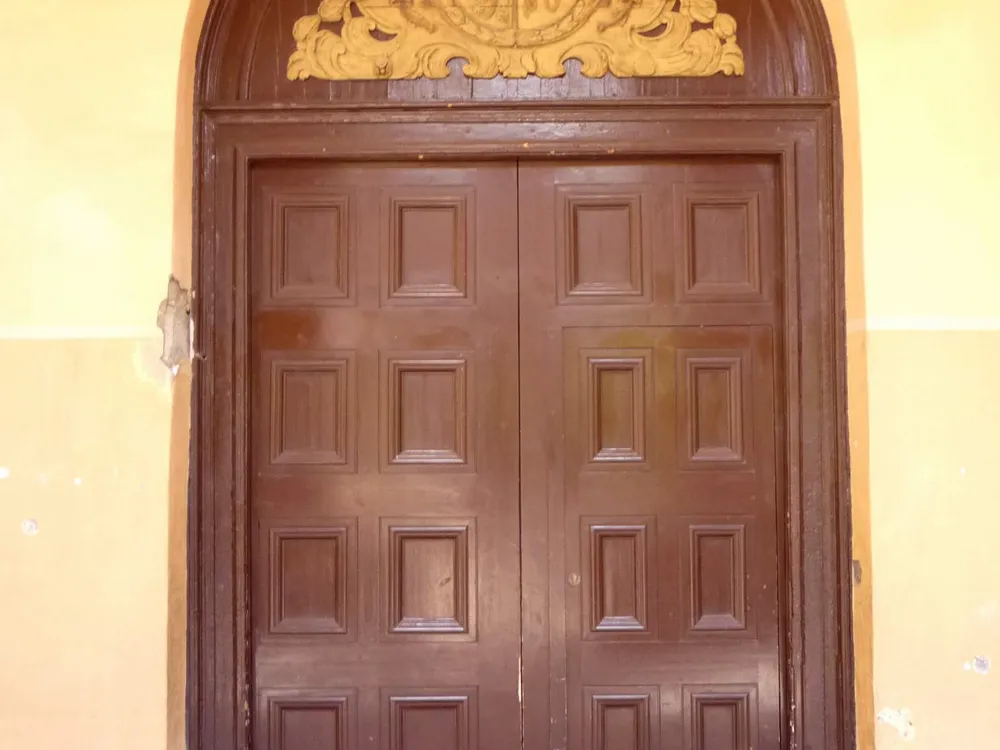
Convento-Colegio Santo Domingo
Dominican monastery and university built from 1553, nicknamed 'The Escorial of Levante'. Renaissance and Baroque cloisters frame a richly decorated church; it housed Spain's first public library in the sixteenth century and is designated a national artistic monument.
The Convento-Colegio de Santo Domingo, popularly known as «the Escorial of the Levante» for its scale, is one of Orihuela's most monumental buildings. Construction began in 1553, under the direction of Juan Inglés, commissioned by Archbishop Fernando de Loazes, a year after a papal bull from Julius III had turned the college into a pontifical institution.
From convent to university
In 1569, a further bull, this time from Pius V, raised the college to the status of an Estudio General or University, first as a pontifical university and, from 1646, as a royal one. For nearly three centuries the building combined its role as a convent of the Dominican order with that of a university, until the university eventually ceased to function. It also housed what's considered Spain's first public library, founded in the 16th century and known today as the Biblioteca Fernando de Loazes.
The complex mixes Renaissance, Baroque and Rococo elements, with cloisters from different periods framing an elaborately decorated church. Both the building and its historical significance led to it being declared a national artistic monument. The site remains linked to education today, home to a school.
The Convento de Santo Domingo stands close to other landmarks in Orihuela's historic centre, including the cathedral, the Castillo-Alcazaba and the Casa-Museo de Miguel Hernández, making it easy to combine with the rest of the city's heritage.
Frequently asked questions
Is there an entry fee?
Yes, access to the convent-college is ticketed.
Why is it called «the Escorial of the Levante»?
For the scale and ambition of its architecture, compared to the El Escorial monastery near Madrid.
What did it serve as besides a convent?
It housed a university, first pontifical and later royal, for nearly three centuries, and held one of Spain's earliest public libraries.
Comments
Sign in with Google to comment and rate
Be the first to comment.