What to see in Benidorm
Benidorm packs more than 300 towers into a single skyline, several over 150 metres tall, which has earned it the nickname "Manhattan of the Mediterranean." Two bays split by a central headland shape the city: Poniente beach, wider and less built-up along its edge, and Levante beach, the more urban of the two, backed by the seafront promenade and much of the hotel supply. Offshore, the Illa de Benidorm gives the bay a visual landmark and is now a protected marine reserve. The city's municipal area covers 38.5 square kilometres and has the highest population density in the Marina Baixa district.
From fishing village to leading destination
Benidorm received its founding charter on 8 May 1325, granted by Bernardo de Sarriá, and lived off fishing for centuries, particularly tuna caught with the almadraba net technique, until the mid-20th century. The shift toward tourism began under mayor Pedro Zaragoza Orts, who pushed through an urban plan in 1956 designed from the outset around tourism, with wide blocks and building heights meant to house large numbers of visitors without spreading over more land. The opening of Alicante-Elche airport in 1967 multiplied charter-flight arrivals and cemented the model. Today the city, with just over 77,000 registered residents, multiplies its population several times over during the summer months, and its hotel capacity ranks third in Spain by number of beds, behind only Madrid and Barcelona.
Viewpoints, theme parks and nature
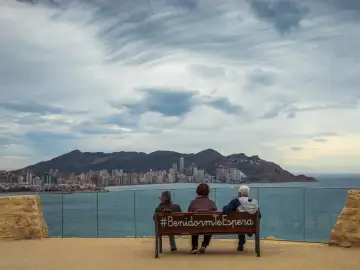
The Balcón del Mediterráneo, on the boundary between the two beaches, is the city's best-known viewpoint over the sea and the old quarter. To the north, the Parc Natural de la Serra Gelada offers cliffs and trails looking out toward the island, a sharp contrast with the skyscraper skyline; among them, the Intempo tower stands 202 metres tall, one of the tallest residential buildings in Spain. The city's theme parks, including Terra Mítica, add to the family-oriented offer alongside the beaches, among them the quieter Platja del Mal Pas, next to the old town.
Benidorm has held the Benidorm Fest since 2022, the contest that selects Spain's Eurovision entry, and in 2024 the city recorded close to 2.8 million visitors according to municipal tourism figures. That volume makes tourism by far the city's dominant economic activity, supported by a hotel and apartment sector built up over several decades. In 2022, Benidorm also became the first Spanish city certified as a Destino Turístico Inteligente, a designation recognising how it manages tourism infrastructure and data.
🚆 How to get there from Alicante
Benidorm sits around 45 kilometres from Alicante and is one of the best-connected destinations on the coast. The metropolitan TRAM (line 1) runs directly between the city centre and Benidorm, calling at the airport, with a stop at the intermodal station next to the bus station; the tram journey takes roughly an hour. By car, the AP-7 motorway links the two cities in under an hour under normal traffic. Direct buses also run from Alicante's bus station, with frequent departures throughout the day given how much demand the route sees. Within Benidorm itself, the seafront and old town are compact enough to explore entirely on foot once you arrive.
Compare all towns by transport →
-
 Water parkAqualandiaBenidorm — Rincón de Loix, Serra Gelada (Marina Baixa, Alacant)
Aqualandia opened in 1985 as Spain's first water park. It occupies 150,000 square meters with more than 15 attractions, from vertiginous…
- 🌊Water parkAqua Natura BenidormBenidorm — Foietes-Sierra Helada (Marina Baixa, Alacant)
Aqua Natura is a 40,000 square meter water park with sea lion shows included.
-
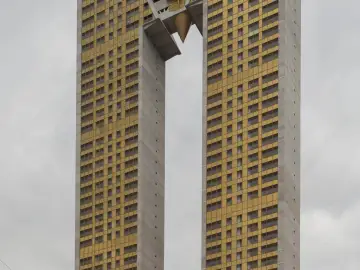 Monument · FREERascacielos InTempoBenidorm — Marina Baixa (Alacant)
The InTempo skyscraper measures 202.5 meters in height with 47 floors.
-
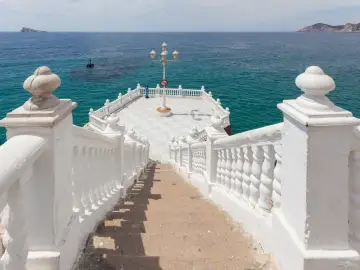 Viewpoint · FREEBalcón del Mediterráneo (Mirador del Castillo)Benidorm — Marina Baixa (Alacant)
The Balcony of the Mediterranean is a viewpoint with pentagonal shape built on a rocky cliff.
-
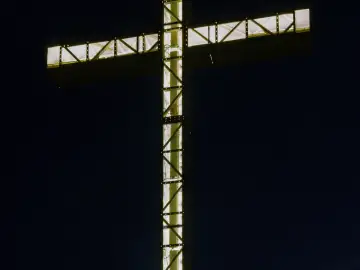 Viewpoint · FREELa Cruz de Benidorm (Mirador de la Creu)Benidorm — Marina Baixa (Alacant)
The Cross of Benidorm was erected in 1961 on the summit of Serra Gelada, at almost 400 meters above sea level.
-
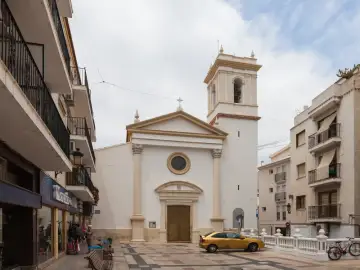 Church · FREEIglesia de San Jaime y Santa AnaCasco Antiguo, atop the Canfali hill (Balcón del Mediterráneo), Plaça de Sant Jaume
The church of San Jaime and Santa Ana was built between 1740 and 1780 in neoclassical style.
-
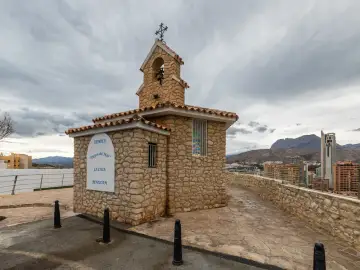 Church · FREEErmita de la Virgen del MarPunta Canfali / Balcón del Mediterráneo, on the cliff above Playa de Poniente
Small and simple hermitage located 100 meters above sea level on the Poniente cliff.
- ⛪Church · FREEErmita de San Antonio Abad (Ermita de Sanç)Partida de Sanz, rural agricultural area about 5 km east of the centre
Hermitage built in 1740 by Tomás Sanç in the Sanz district, 5 kilometres from the centre.
-
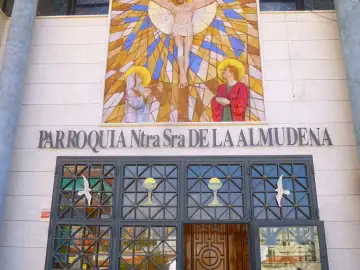 Church · FREEIglesia de Nuestra Señora del CarmenAvenida del Mediterráneo, behind Playa de Levante
Brutalist temple built in the Levante tourist zone. Its exposed concrete and angular volumes break from the historical temples of…
-
 Monument · FREETossal de la CalaBenidorm — Marina Baixa (Alacant)
Roman site on a 100-metre hill in Serra Gelada. A 1st-century BC military fortress occupied by troops of Quinto Sertorio around 77 BC.
- 🌿Beach & nature · FREEParc Natural de la Serra GeladaBenidorm — Marina Baixa (Alacant)
Natural park declared in 2005 with cliffs over 300 metres above the sea.
-
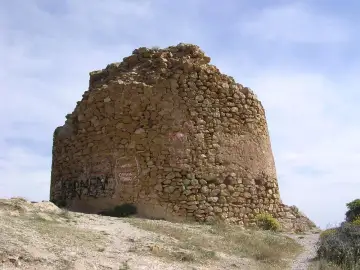 Monument · FREETorre de les Caletes (Torre del Cavall)Benidorm — Marina Baixa (Alacant)
16th-century defence tower at Punta del Cavall, built by order of King Felipe II.
-
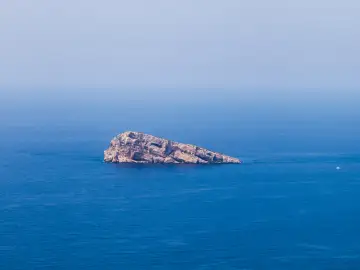 Beach & nature · FREEIlla de BenidormBenidorm — Marina Baixa (Alacant)
Small island 3.5 kilometres from the coast, 350 metres long by 260 metres wide. It reaches a maximum height of 73 metres.
-
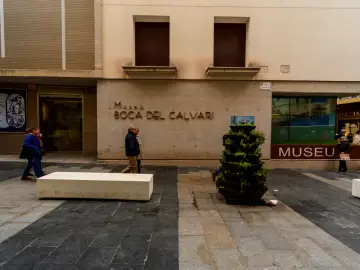 Museum · FREEMuseu Boca del CalvariBenidorm — Marina Baixa (Alacant)
Municipal museum of Benidorm opened in 2015, housed in a glazed ground-floor building on the site of the first city hall, from 1916.
-
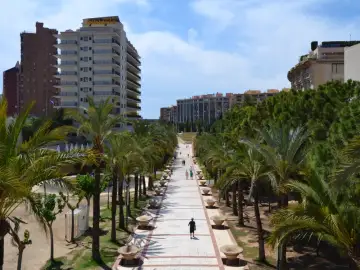 Garden · FREEParc de l'AigüeraBenidorm — Marina Baixa (Alacant)
Urban park of 5.7 hectares designed by Ricardo Bofill in 2004. It separates old Benidorm from new with broad walkways, flower gardens,…
-
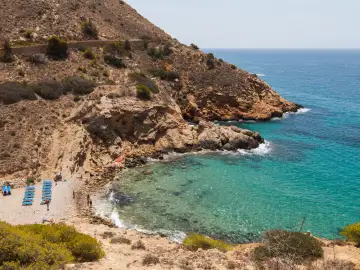 Beach & nature · FREECala del Tio XimoBenidorm — Marina Baixa (Alacant)
Virgin cove barely 60 metres long and 6 metres wide, set between Sierra Helada cliffs.
-
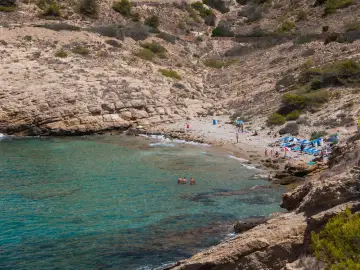 Beach & nature · FREECala de l'AlmadravaBenidorm — Marina Baixa (Alacant)
Cove of 100 metres north of Benidorm, in a wild setting at the foot of Serra Gelada.
-
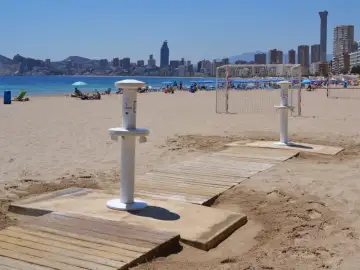 Beach & nature · FREEPlatja del Mal PasBenidorm — Marina Baixa (Alacant)
Small beach of 120 metres between the main beaches, beside the port and old castle.
-
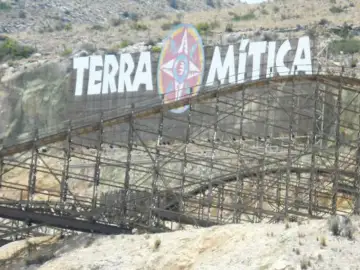 Cool venueTerra MíticaBenidorm — Marina Baixa (Alacant)
Theme park opened in 2000 with 33 attractions across 5 Mediterranean civilization zones: Egypt, Greece, Rome, Iberia and Islands.
-
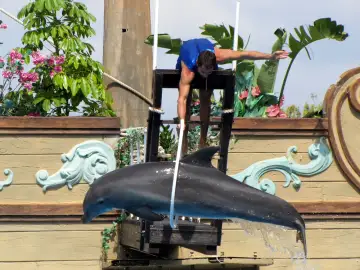 Cool venueMundomarBenidorm — Marina Baixa (Alacant)
Marine and exotic animal park with over 80 species. Sister park to Aqualandia, sharing a car park.
🏖️ Beaches
- 🌿Beach & nature · FREEPlaya de Levante (Benidorm)Benidorm
Benidorm's postcard shot: over two kilometres of golden sand with the city's skyline of towers as a backdrop — the liveliest, best-serviced…
- 🌿Beach & nature · FREEPlaya de Poniente (Benidorm)Benidorm
Benidorm's other big beach, west of the old town: over three kilometres of sand with an internationally awarded, wave-shaped promenade, a…
Frequently asked questions
Can you get from Alicante to Benidorm by public transport?
Yes, the metropolitan TRAM connects the two cities directly, with a stop at the airport, and regular buses also run throughout the day.
Which Benidorm beach is best for children?
Levante and Poniente both have a gentle slope and seasonal services; Mal Pas, smaller and more sheltered next to the old town, tends to be less crowded.
Is Benidorm worth visiting outside summer?
Yes, spring and autumn bring mild weather, a quieter seafront promenade, and more hotel availability than during peak season.